Features

  • Buying Guide: Buying a Japanese classic

    Buying Guide: Buying a Japanese classic

    by

    โ€“

    Yamaha RD350LC Pricey, but still worth the money because these bikes will continue to go up in value. In 50 years of Japanese motorcycles few machines have genuinely made classic status. These are the elite. In some cases it comes with racing pedigree, others simply changed our world. Honda’s RC30 is already a classic because it was based heavily…

    Continue reading »

  • Workshop: Suzuki GT750: part one

    Workshop: Suzuki GT750: part one

    by

    โ€“

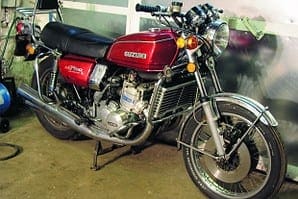
    Suzuki GT750 workshop rebuild We've departed from the magazine's series slightly and joined the rebuild on reassembly, mainly because this was a seven parter in print. We've honed it to four. Our bike is a 1976 registered GT750A, engine no. 74465, frame no 81196, of which approximately 14,000 models were produced. The engine number and…

    Continue reading »

  • Workshop: Steering head bearings

    Workshop: Steering head bearings

    by

    โ€“

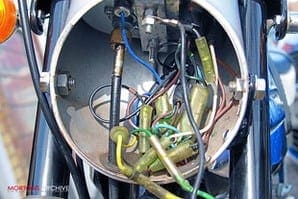
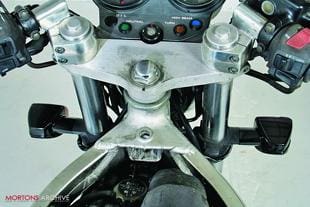
    Makes notes before disconnecting loom… An average 1970s 250 weighs around 150 kilos and if we assume an approximate 50/50 weight distribution then the front steering races are coping with a 75kg load whenever the bike is off the stands. Factor in a rider and we’re looking at least another 35 kilos over the front…

    Continue reading »

  • Road Test: Honda CB1100F

    Road Test: Honda CB1100F

    by

    โ€“

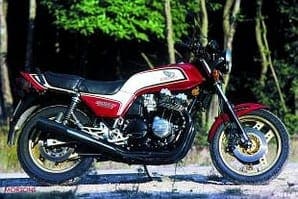
    Honda CB1100F Produced in 1983 for the US and European markets (it was inexplicably not an official UK import), the 1100F had the same air-cooled four-cylinder engine but with less of the hand-crafted attention that made the 1100R so much of a cult bike. Nonetheless, the 1100F offered much of the 1100R’s 140mph performance in…

    Continue reading »

  • Buying Guide: Honda Bros

    Buying Guide: Honda Bros

    by

    โ€“

    Honda 650 Bros A narrow engine lying in the natural V of a frame with a loping power delivery; the set up became iconic in the formative years of motorcycling. The 650cc category was once at the very edge of big bike territory but with the advent of late 70s Superbikes it effectively fell into…

    Continue reading »

  • Buying Guide: Yamaha FZ750

    Buying Guide: Yamaha FZ750

    by

    โ€“

    Yamaha FZ750 You’ve got to feel sorry for Yamaha sometimes. Their timing is terrible. So many times they launch a good bike and it gets aced by the opposition. Okay, so there are exceptions (350LC, R1, etc) but the FZ750 is only now reaping the appreciation it deserved when it was brand new. When it…

    Continue reading »

  • Buying Guide: Yamaha FS1-E

    Buying Guide: Yamaha FS1-E

    by

    โ€“

    Yamaha FS1-E 50cc Who'd have ever thought that a moped could become one of the ultimate symbols of teenage rebellion? Back in the late 60s the UK government was becoming increasingly alarmed at the growing tide of motorcycle injuries suffered by young, inexperienced riders on 250cc machines. Once the reserve of old Brit plodders like…

    Continue reading »

  • Buying Guide: Kawasaki 750H2B Mach IV

    Buying Guide: Kawasaki 750H2B Mach IV

    by

    โ€“

    Kawasaki 750H2B The 1969 Kawasaki 500H1 Mach III triple was the first motorcycle of its kind. It was cheap to manufacture, stylish and brash, and delivered performance unfettered by any concerns of economy or tractability. Capable of a 12.3 second standing quarter right out of the crate it had brakes that were, at best, adequate;…

    Continue reading »

  • Workshop: Balancing carburettors

    Workshop: Balancing carburettors

    by

    โ€“

    Adjusting carb throttles Assuming you run a Japanese four cylinder motor you will almost certainly have four carbs, one for each pot. When you  open the throttle you need all four carbs to respond at the same time so each cylinder gets the same amount of fuel and works with its neighbours. In real life…

    Continue reading »

  • Road Test: Kawasaki H1 500

    Road Test: Kawasaki H1 500

    by

    โ€“

    Kawasaki H1 500 Kawasaki first proposed a 500cc two stroke triple in the late 1960s, when Japanese manufacturers were making a concerted effort to cater for American tastes in particular. In the US, acceleration was what sold bikes (and cars, for that matter). The 350 Avenger twin was already as fast as most British 650s…

    Continue reading »