
From the era that style forgot came a machine like no other: Yamaha’s RD350LC. What made this bike (and little brother and subsequent models) so well-loved? Bertie Simmonds explains…
At the start of the 1980s, we were under the shadow of The Cold War, Thatcherism had been unleashed upon us, and unemployment was hitting two million thanks to a country in the depths of recession.

And then there was the music… Actually, lots of the music was pretty good apart from Black Lace. And the comedy was pretty good too, oh and the motorcycles.
Enjoy more Classic Motorcycle Mechanics Magazine reading every month.
Click here to subscribe & save.
If ever there were motorcycles built for Britain at that time it was the RD250 and 350LC. Even if they were made in Japan. Sure, they were a bit pricey in 1980 (£1030 for the 250 and £1130 for the 350) but you’d get it on the never-never anyways, right?
Both bikes made everything else on two-wheels pretty much redundant overnight. In the learner-legal 250cc class, the RD was the puppy. And the 350 was like a plucky under-dog, taking on machines twice its size: why have anything bigger?
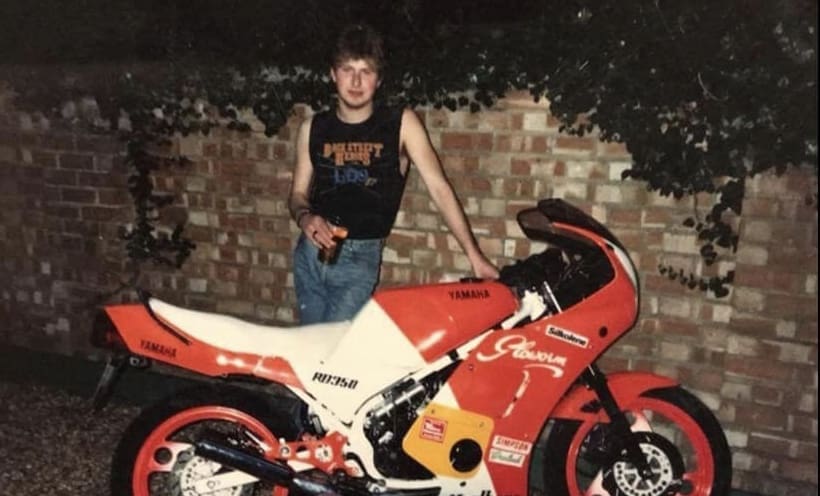
Just ask one Niall Mackenzie. “My original bike was PUS 581W and after being run-in, serviced (and cured of a nasty splutter and fitted with beefed up exhausts to prevent the manifolds cracking) it was a whistling missile! I soon had to try it out against the chip shop competition. None of its contemporaries came close. Bigger game couldn’t corner and one night when I cleaned up against a fairly tasty rider on a GS750, that was a defining moment for me. Yamaha had built an amazing little bike that was way ahead of its time.”
Niall’s pal and former team-mate at Cadbury’s Boost Yamaha in 1996 – James Whitham – also loves LCs and thinks he knows what made them so good. He says: “The thing with the LC is that it was ‘just right.’ They were so well balanced. If it had a bit more power or one of the other parameters were different, it would have spoiled the bike.”
With it’s RD (Race Developed) heritage, it was little wonder both the 250 and 350LCs often found themselves on the track. It helped create a number of future race stars, Mackenzie being one of them.

Back on the road and as the years went by, the bike was often mucked about with. The initial ‘Pro-Am’ bikini fairings could be swopped out for a full Mel Lemoto fairing or Mead Speed bodywork. Standard expansion chambers soon were replaced by either Allspeeds or Microns and a fork brace was essential. Tuners such as Stan Stephens and Terry Beckett could give you more than the standard 47bhp, whether you raced or not.
The bike became legend, winning bike of the year awards which should have been won by much larger capacity machines. But then the ‘Elsie’ had been taken to our hearts by then. And taken by thieves: allegedly the LC was the most nicked mode of transport in early 1980s Britain, more so than the Ford Escort!
Of course, things changed; they always do. In 1983 in came the YPVS or ‘Powervalve’ and the bike would be developed through the 1980s before being replaced by a new breed of 250cc race-replica crotch rockets. For me, they were like suppositories and not as comfy as my F2.
Today the love of the LC in all its forms is as strong as ever.