
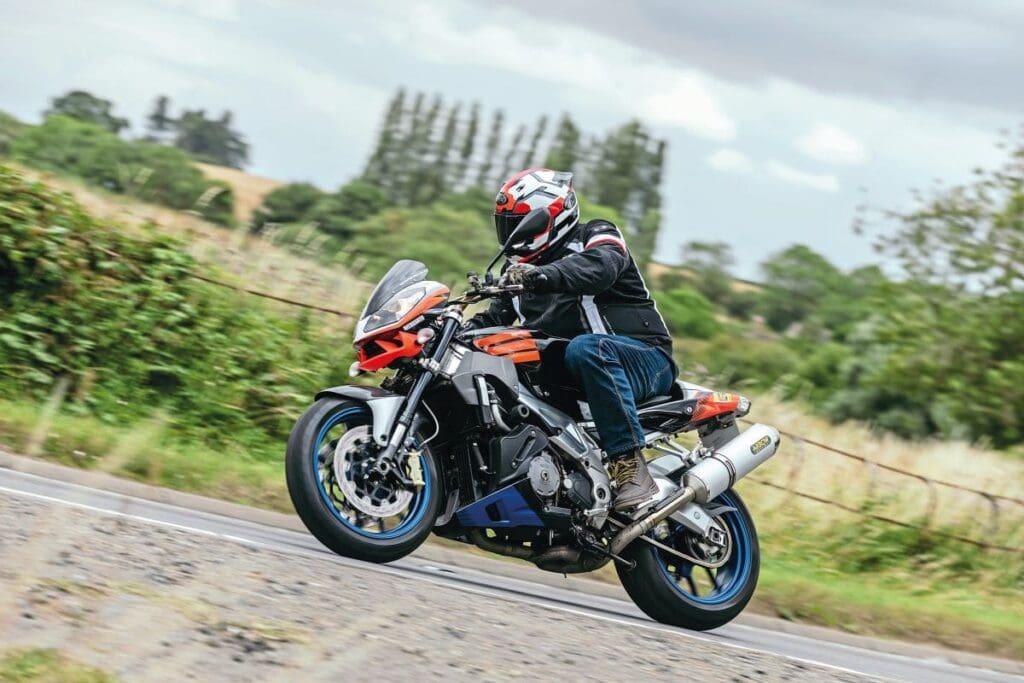
Few bikes can put a smile on your face like a big-capacity V-twin and Aprilia’s Tuono family can probably put the biggest grin on yer mush. But don’t expect comfort or ease-of-use, says Bertie Simmonds…
Words: Bertie Simmonds Pics: Gary Chapman, Mortons Archive
There’s something I love about the Italians and their attitude to things, people and machinery. There’s no half-arsed approach; no toe-in-the-water; they love you or they hate you; it’s go big or go home; it’s all in or not in and I love that side of them.
Enjoy more Classic Motorcycle Mechanics Magazine reading every month.
Click here to subscribe & save.
Think about their motorcycles: beautiful and effective. Paul Smart’s 1972 750SS, the 916, Laverda’s Jota and, of course, more than a few Aprilias. I’ve long been a fan of the Noale-based manufacturer. In the late 1980s and early 1990s the ‘special ones’ (rich kids) rode around our estate on Italian 125s: mainly Aprilias, (okay, the odd Cagiva Mito), a mix of AF1s, one Loris Reggiani rep, and a gaggle of the later Extremas. These were L-plated learner-legal bikes but looked like the pukka Aprilia race machines that were tearing up the tracks in a haze of two-stroke. Better still, later models would always carry a badge on the tank showing how many world championships they’d won – they took their first world 125cc championship with Alessandro Gramigni, and they celebrated the big names by marking some of their bikes in the colours of the big names: not just Gramigni and Reggiani, but many others, too…
When Aprilia started making large-capacity twins (see boxout) and later the naked versions of them, they were never going to do what the Japanese did (remove fairing, detune engine), they were going to remove the fairing, keep the power and make it look even saucier…
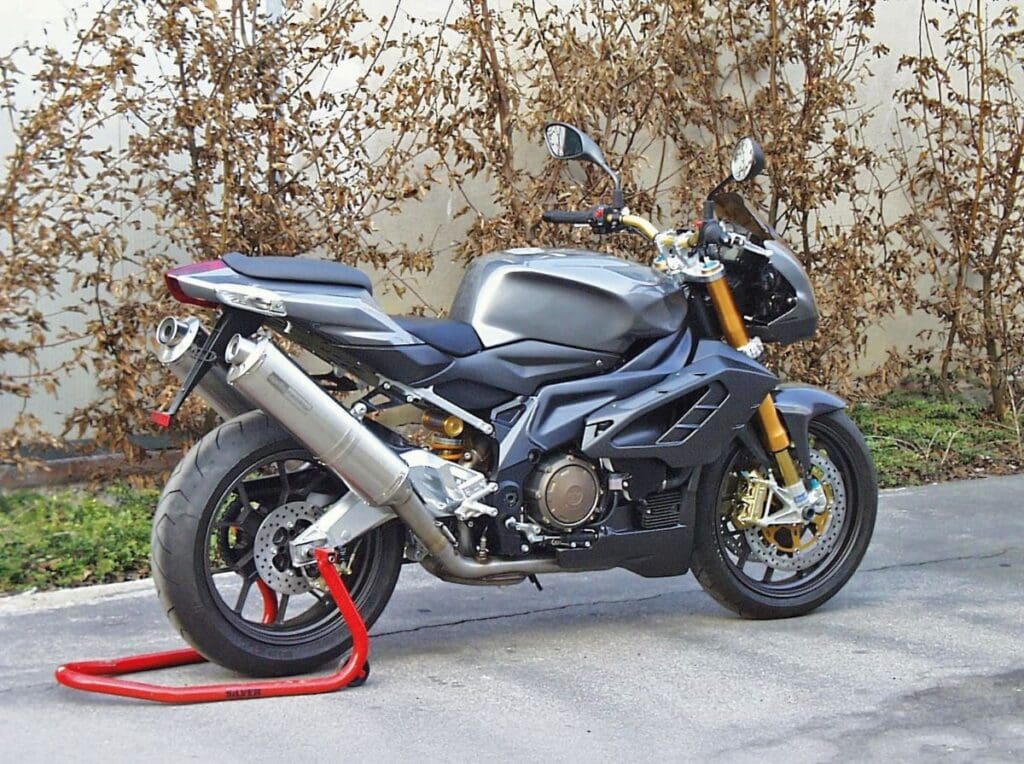
There is something special about owning an Italian bike. Yes, it is different, yes, it sometimes can be more demanding than owning a Japanese machine, but it sure is rewarding. Having owned a couple of Milles and ridden lots of Tuonos (I think the name translates to ‘Thunder’) I figured that I’d eventually get one of the naked models and now I’m looking at this one – my own – there’s a glow of pride.
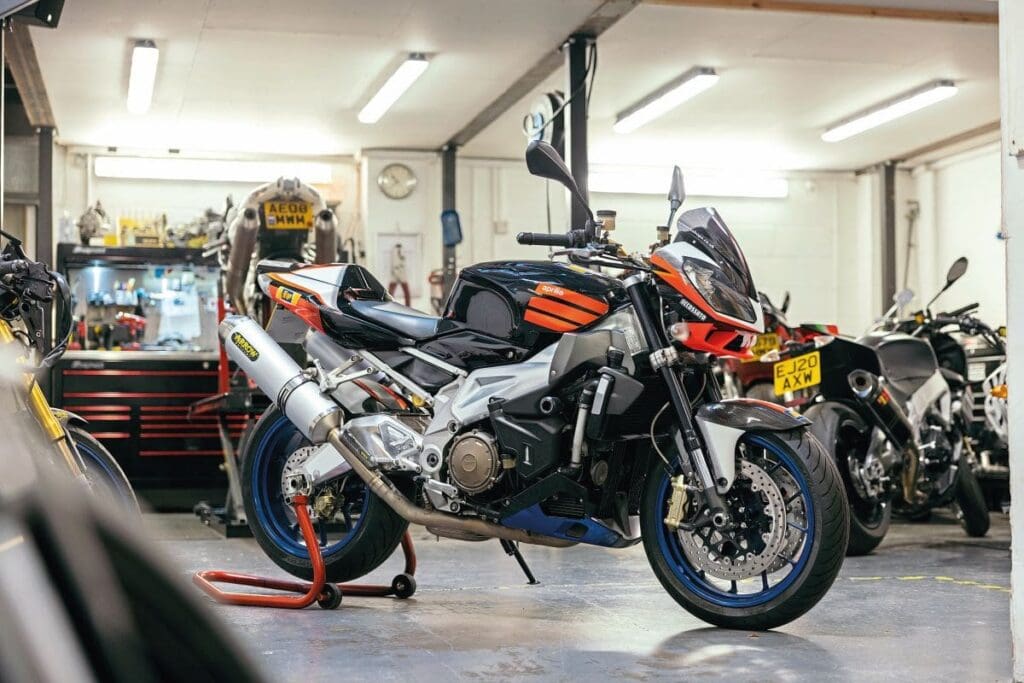
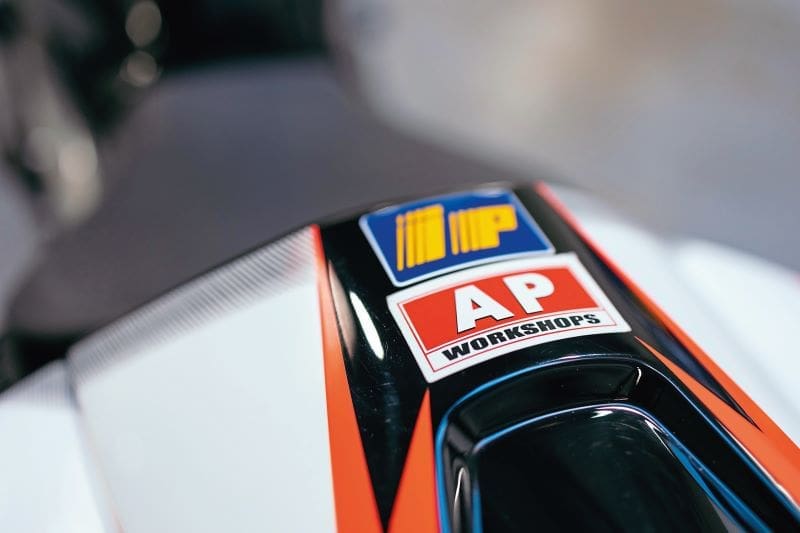
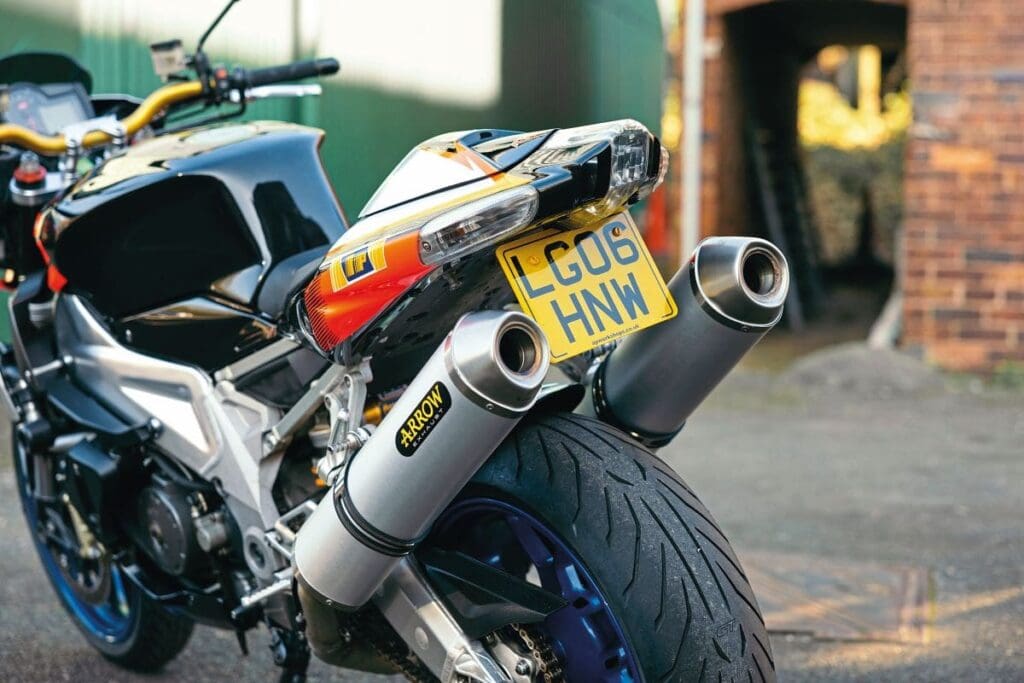
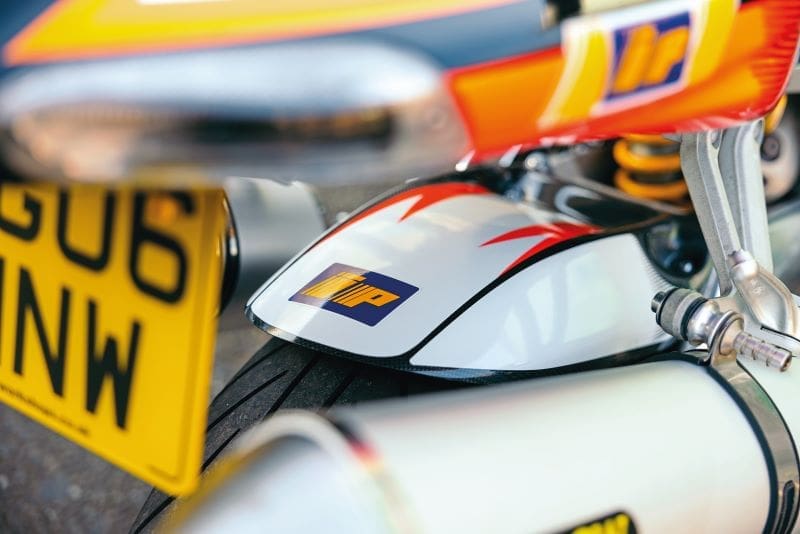
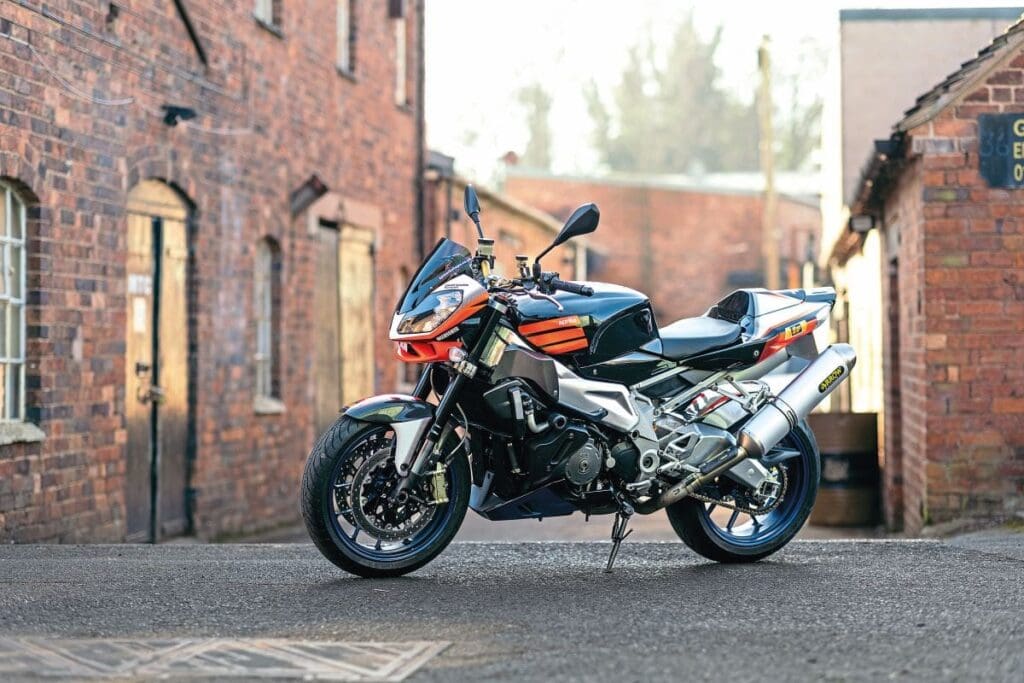
The work was all done by a talented bunch of people, mainly by AP Workshops (www.apworkshops.co.uk), Dream Machine (www.dream-machine.co.uk/) and, of course, PDQ (https://pdq1.com/) for the rear shock. The look is race-derived, just like Aprilias of old. Limited-edition Milles included a Colin Edwards and a Noriyuki Haga replica and Kev Porter and the chaps at Dream Machine opted to go for a pseudo-Haga rep and I love it.
Just listen to it!
As you approach the bike, that colour scheme should give you a warning before you swing a leg over the bike: it’s not a rinsed-out, low-calorie naked, like an old Hornet or even original Fazer 1000 – this is a sports bike but with a different slant…
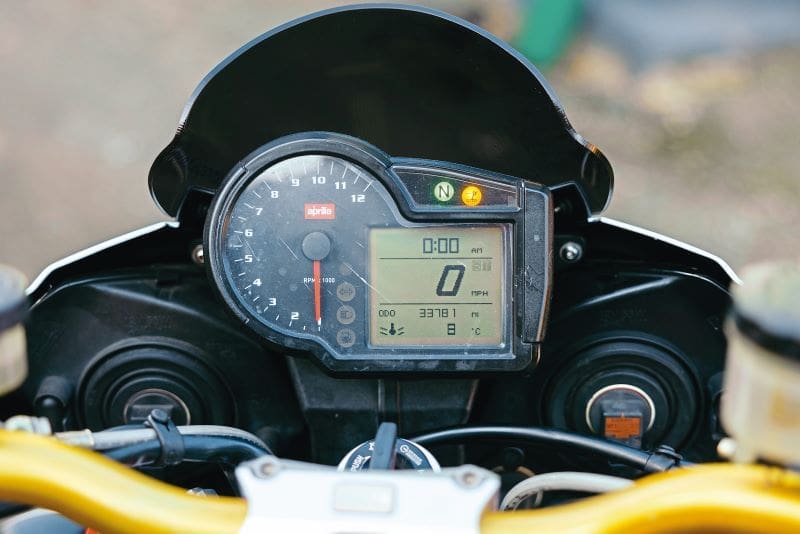
Compared to the Gen.1, the look seems more considered and balanced. The Gen.1 is (rightfully) loved but it does look like a Mille with the bottom fairing removed and bars slapped on it because the top fairing is the same as the sports machine. The Gen.2 is completely different – or at least looks it – thanks to the aggressive nose cowling, which benefits from an intake that looks like a Eurofighter Typhoon’s (Aprilia did say they developed the bike in a wind tunnel…). The mini-screen is also a useful addition, under which sits the dash layout. Much as I love the Gen.1 machines, the clocks were a nightmare of buttons and lights, and the Gen.2 set up is a more restrained right-side LCD (under a neutral and side-stand light) giving the vital info of speed, temp/odo/time with a prominent tachometer housing the traditional idiot light cluster, including a low fuel light, indicators and high-beam.
Chucking a leg over the bike and the feeling of ‘sport’ continues. Sure, the bars are high, but so is the seat (840mm) and those foot-pegs. You’ll cuff that pillion cowling (and moan about it, if you’ve paid for the paint, like I have…). The pegs are high for a naked, but the gearbox snicks nicely into neutral and then it’s time to thumb the starter… There’s a clatter from the starter before the motor bursts into life. And burst it does, through those lovely-sounding Arrow cans. Oh, what a cool cacophony this is. You can’t help but rev it a bit at a standstill, as if you’re a factory mechanic in a sun-kissed pit-lane… Instead, I’m on my drive in autumn: time to waddle backwards on to the road and get away…
Before the off, let me think about that motor – it’s truly one of the greats from the 1990s and 2000s. It’s a 997.62cc, 97mm x 67.5mm Rotax-derived 60-degree four-stroke V-twin, complete with twin balancer shafts. A quarter-of-a-century since its debut, it’s proven to be a pretty reliable lump all told and employed in this chassis, it’s got a claimed 133bhp (up around 8bhp) thanks to internal changes such as throttle bodies, bigger exhaust valves and a touch more compression. In my history stash on this bike, I’ve got a dyno run showing 120bhp at the back wheel – I will take that and it may have more besides now the Arrow pipes are fitted – this one has a Power Commander, too.
Gently does it!
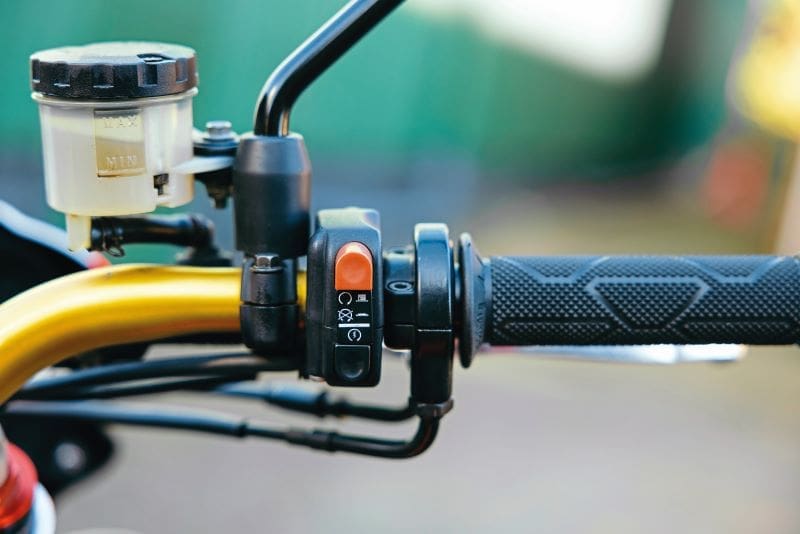
Toddling out on 30mph roads you’ll be slipping the clutch a little with that tall first gear (they changed the gearing on the Gen.2), but once you plonk the vanishing point further up towards the horizon you can start to have some fun. There are no electronics here, despite the ‘Trip 1, Trip 2, Mode’ slider on the left-hand bar… So, open that throttle if you dare. With the weight of the rider more to the rear, if you do open the loud handle with a yank, you will head skyward.
The slightly snatchy feel to the power delivery low in the rev range adds to the excitement, but overall the feeling as you go through the revs is that the motor is smoother than the Gen.1 powerplant. Interesting that tightening EURO regs made for a silkier motor, but ‘smooth’ and ‘silk’ are the last two words in your mind with the tacho swinging from 6000 towards 9000rpm, it’s more like ‘sh*t!’. This motor is still so very strong – even compared to more modern lumps. It’s very impressive, more so with the unfiltered Arrow soundtrack…
Riding the torque curve then, is where the Tuono is at. But while that sounds like the thing you’d do on a sports-tourer, let me tell you, the Tuono demands input and concentration. From first gear on, the lever on this bike is a touch notchy and you’re using it quickly as the ratios are close together, but your grin is widening and the corners are coming up quickly and the downshifts sound superb and the Aprilia slipper clutch helps, too.
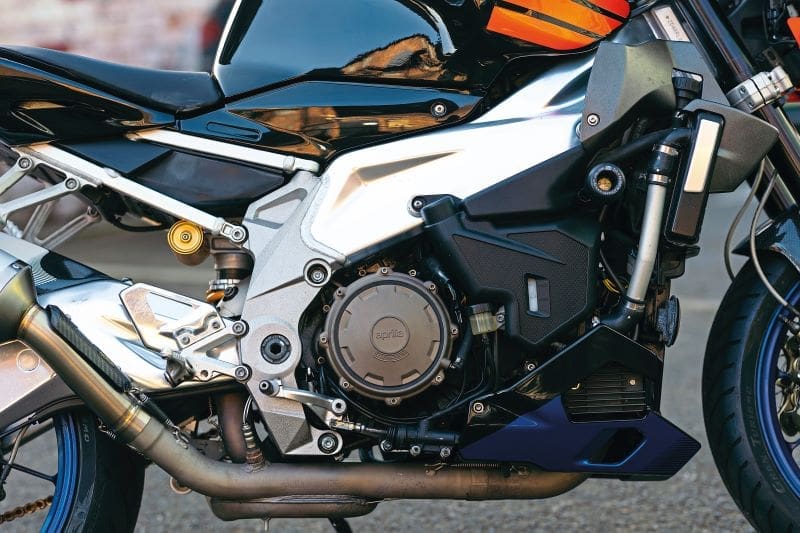
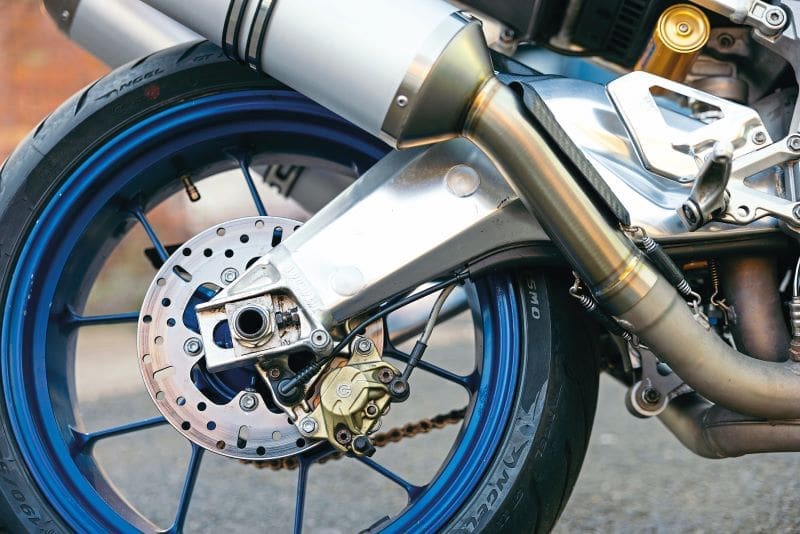
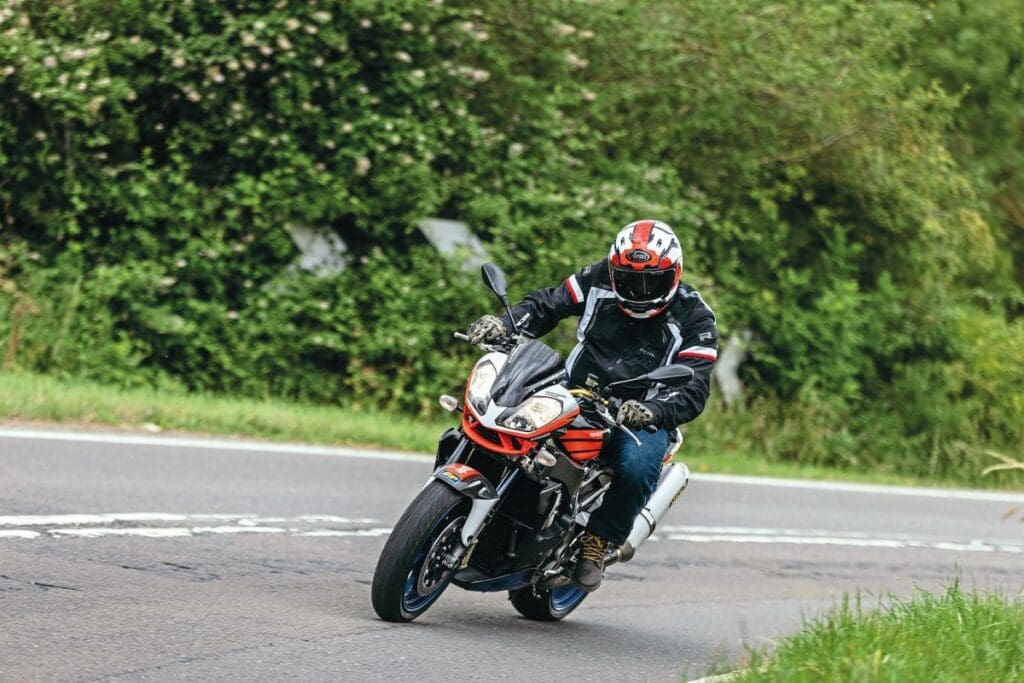
Handling is not super-swift – there’s a handy and discreet steering damper tucked away – but you do need to put the effort in via pegs and bars. Yes, the pegs are higher than you’d think and there’s perhaps more weight on your wrists than you’d recall from past rides, but it all adds up to a well-balanced sporting motorcycle. One thing that stays with me with all Gen.1/2 bikes – Milles or Tuonos – is that they always feel a tad top-heavy and (as I recall, not here but on track) upright to full lean-as-you-dare feels like a bungee jump compared to some bikes. Also, back in the day some bikes ran on 190-section rears, while some bikes (Factory models) came with optional 180 section, which can speed up handling a little. Mention here must be made of the sports-touring tyres fitted: the Pirelli Angel GT II suit the rider perfectly – I love a bit of fun, but I also need tyres to last as well as they perform. These do, apparently.
Suspension-wise, back in the day it erred on the side of ‘hard’ whatever model you had. Of course, back two decades or so ago, you’d spend extra to get a model with tricker/better suspension but all versions were stiff and sporty, even the Showa front/Sachs rear of the standard Gen.2. Today things are still the same. The PDQ refurbished rear Ohlins is stiffer than a Masterchef meringue and – while the front hasn’t been sorted or fiddled with – it feels stiff, too. Not bad stiff, as they handle the bumps well, but there’s not a lot of heavy dive even when you go for that brake lever and really employ those stunning brakes. Yes, these are powerful Brembo radials and they also have chunky and new EBC discs on them.
Overall a ride on this Tuono (probably any Tuono) lures you on… You can go for a ride, eyes full of sleep, but you’ll sense the motor straining at the leash, you’ll cop a glance of the Haga paint job in a shop window and the loony in you will pop out – even just for a moment. As a naked motorcycle, it’s not pipe and slippers, it’s more crack pipe and cowboy boots…
Scores on the doors…
Reliability-wise, these bikes are pretty solid – perhaps not Fireblade/Fazer solid, but way better than the nay-sayers would have you believe. Starter solenoids, sprag clutches and reg-rectifiers are the most notable issues. Also I’ve had two machines spring a small oil leak, which was easily sorted. Suspension lasts as long as anything on a Japanese bike but I have to have my hand on my heart and suggest that ‘fixtures and fittings’ such as bolts and screws do tend to perish quicker than some other manufacturers’ odds and sods. Any RSV needs plenty of TLC, but most dedicated owners know that…
Prices are firming up. About a decade ago I was looking at a Gen.1 Tuono for around £1800. Now nice ones are about double that. Gen.2 bikes overlap on price, with the Factory models clearly commanding a premium. Factory models basically are ones with Ohlins Racing rear shock and forks; lightweight OZ wheels; gold frame colour and some carbon fibre, meaning four kilos less weight. The standard R seen here retailed at £7648 on release (heading to £7995 on Jan. 1, 2006) and you can pick nice ones up from £3500-6500, so prices vary quite widely depending on condition, miles and spec.
One thing you do need to do before pressing ‘bid’, entering your PIN or transferring the cash, is ask yourself what you want from a bike. I had a bit of the old ‘rose-tinted screen’ issue with the Tuono. I remembered well the wolfish grin I’d get from riding these torquey twins which offered little compromise but seemed to recall they were a bit more easy going.
They’re not… a well-sorted Tuono is a thing of power and beauty and only the committed (both senses of the word) need apply…
This Tuono’s rebirth
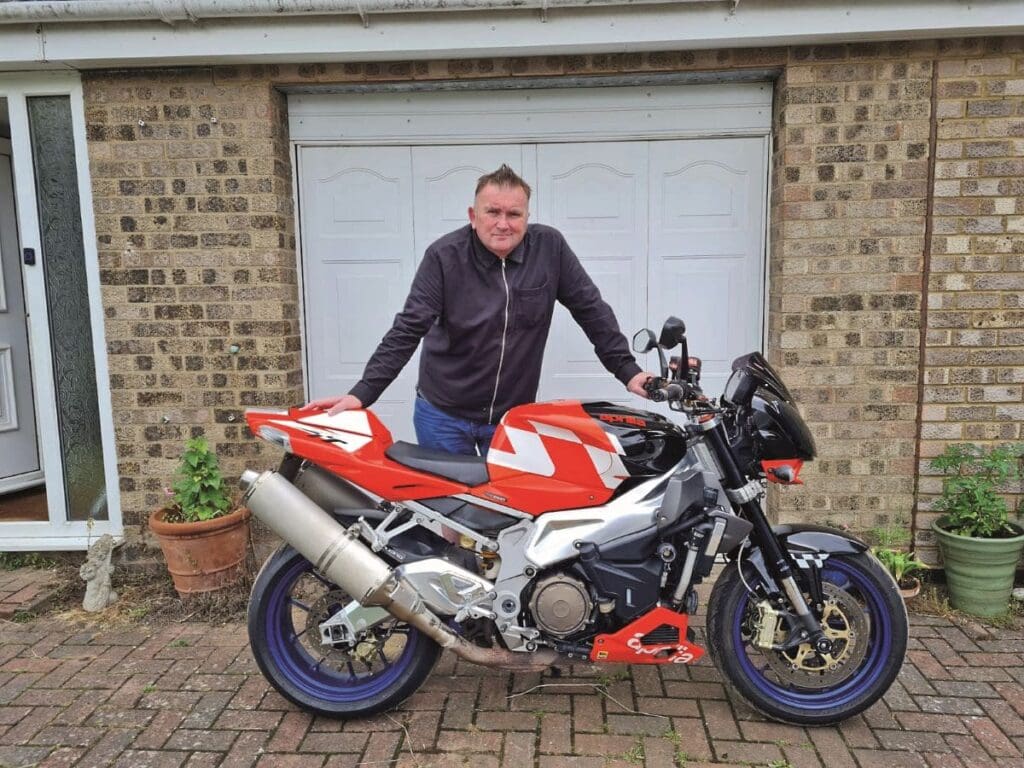
I have to admit I wasn’t really looking for a Gen.2 Tuono. I mean, I love them and have ridden a few, but I was more in the market for either a Gen.1 Mille or Tuono or Gen.2 Mille. So basically any V-twin from Noale apart from this one…
Oh well!
But fools and their money are soon parted and so it proved. As a few quid started to heat up and then burn a hole in my very own pocket in the summer of 2021, I tried to find something V-twin-ish and Italian not too far from home. This was the result…
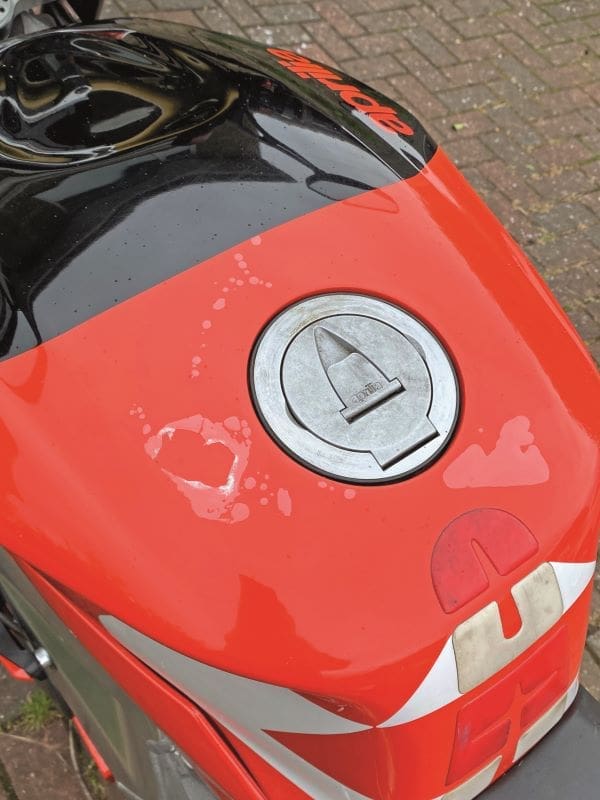
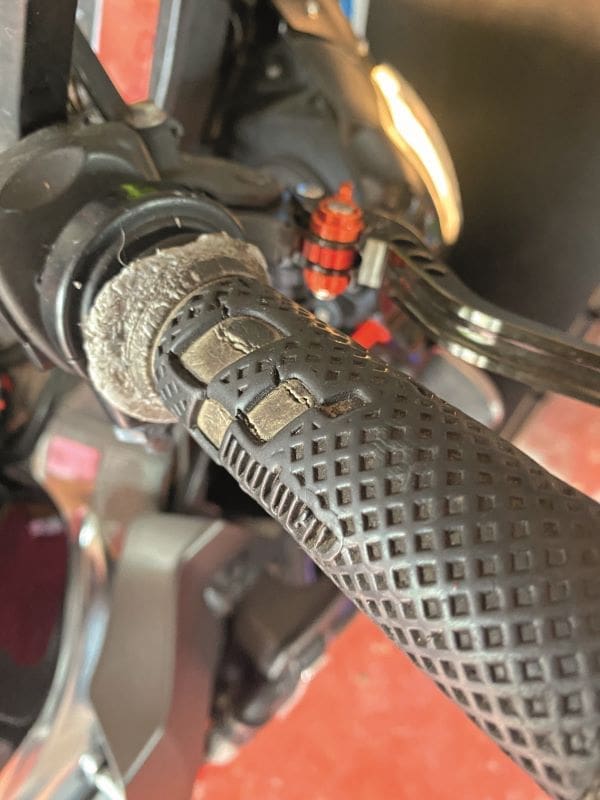
It looked great in the pictures, and I pretty much bought it unseen. Up close and personal, it wasn’t quite as pretty, but it did have lots and lots of history with it – which was a start – and by lots, I mean pretty much all. Bad things were the general shabbiness; peeling lacquer off the tank; naff levers; torn bar grips; and a knackered clutch which saw a couple of hundred quid lopped off the £2400 asking price. That’s a start… shame about the mild oil leak.
Regular readers will have already read the various chapters of the build, which was undertaken by AP Workshops under the genius that is Griff Woolley. Safe to say around £2500 was spent on a list of things including the essential starter solenoid upgrade; extended oil-filter; as well as new brake discs/pads; Arrow cans; refurbished Ohlins shock (from PDQ); and the paint work from Dream Machine.
The bike has had one hiccup – the clutch seemed to stick on for a while. Popping the bike down to Guy Horner at Motoedit (www.motoedit.co.uk) revealed heavy-duty springs and an extra plate, which seemed to be the problem. Back to standard sorted it all… lovely!
But now she has to go. I’ve only got so much space (and money), and the Speed Triple and ZRX1100R projects beckon…
What the Gen.2 Tuono should have been…
The Gen.2 Mille design has fans and those that aren’t so impressed with the updated design, and so it is with the Gen.1/2 Tuono.
At the launch of the new Mille design at Mugello in 2003, Aprilia understandably rolled out the man who’d helped them get to the new design with both the Gen.2 Mille and Tuono, Martin Longmore. As well as being the designer of the Gen.2 bikes, he also designed the first Audi TT – a design classic to this day! I also recall him being a very feisty rider – he actually crashed at the Gen.2 Mille launch and he wasn’t hanging about!
Interestingly, like most designers he didn’t quite get the free hand he wanted and he shared this picture with us of what the Gen.2 Tuono could have looked like: similar, but not quite the same… He said: “Here’s a picture of the prototype. I do feel the design model that you see here was aesthetically and naturally better than the production bike. Why? Well, it’s simple really. I proposed the headlight unit to be actually mounted 20-30mm lower, so the bike looked much more dynamic, with a lower head stance, etc. However, as a consequence that meant you had to mount the steering damper lower. I had a very simple easy solution for that, too: basically a spacer for the lower mounting points. Sadly, the Aprilia technicians and bean-counters were not in agreement so it didn’t happen.”
Originally I considered making the machine that Martin initially wanted to build, but instead we went for something a little more conservative – save for that lovely, showy Dream Machine paint job! Sometimes I think we should have gone this route as the bike (as Martin wanted it) does have a more aggressive stance overall…
Aprilia enters the big league
Stories started to surface in the mid-1990s that Aprilia were finally going to enter the big league with a large-capacity machine of some description.
Sure, they had machines like the Pegaso trailie and the Moto 6.5, but these were single-cylinder machines of 600cc which, with their stylish and sporting scooter and 125cc/250cc range, kept them in the lower-capacity classes until 1998.
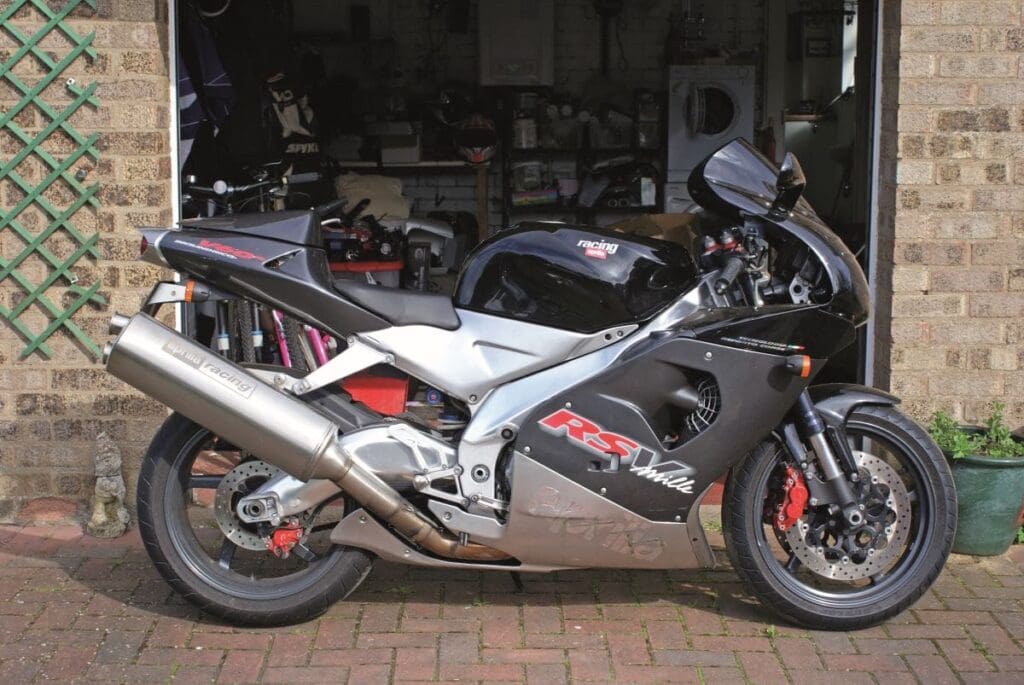
Since the mid-1980s Aprilia had worked closely with Rotax and they joined forces again for 1998’s RSV1000 Mille sports machine. At its heart was a 60-degree V-twin motor with twin balancer shafts and around 128 claimed brake horsepower. Soon the standard RSV was joined by the Ohlins-suspended RSV1000 Mille R and the RSV Mille SP, which was a real homologation special.
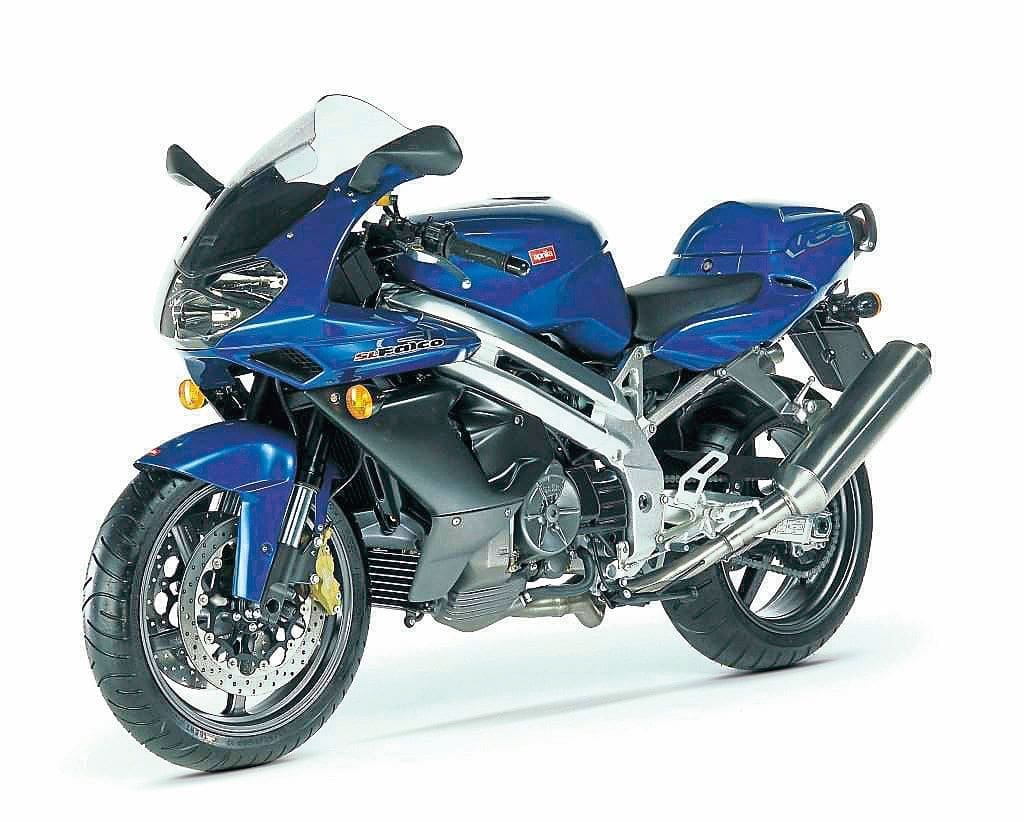
The motor also ended up in the SL1000 Falco from 1999. This half-faired, more comfortable, machine used a mildly detuned version of the motor (claimed 118bhp) and a double twin-spar ally frame. The last of these left the range at the end of 2005.
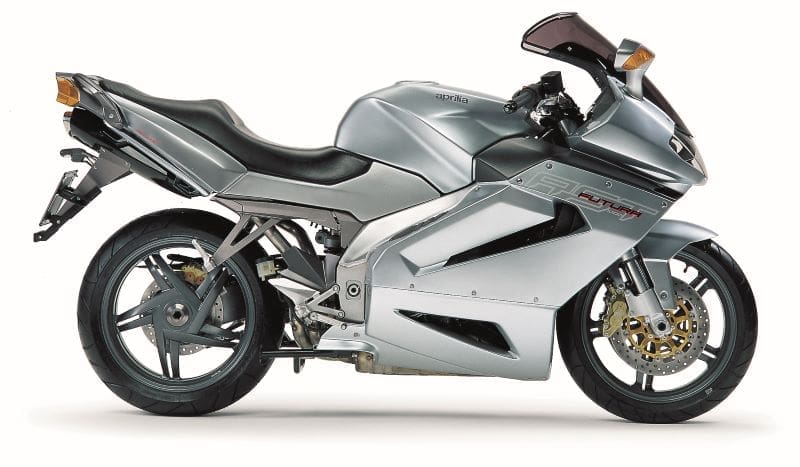
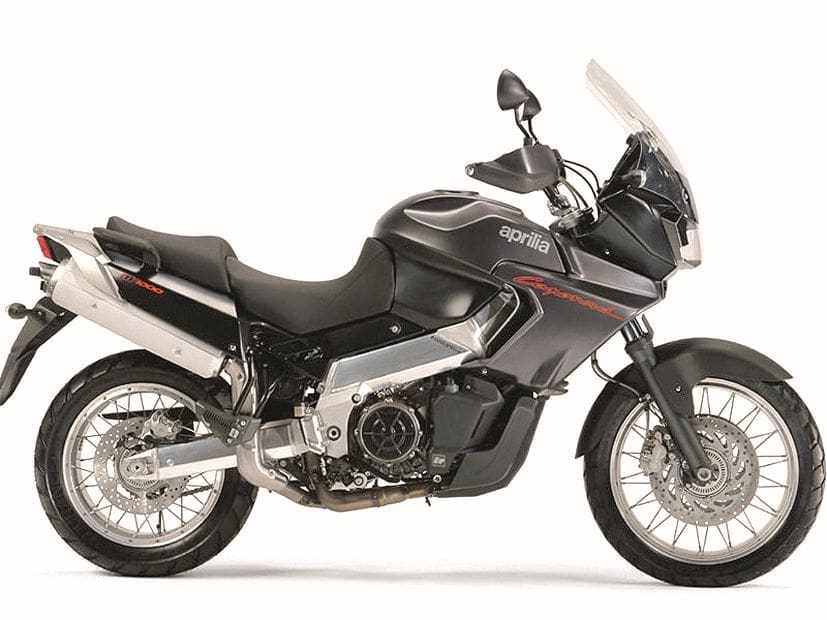
Two more homes for the V-twin motor were the RST Futura and the ETV1000 Caponord adventure bike. The Futura featured angular full-fairings with matching luggage, using the same output motor as the Falco. This VFR competitor didn’t sell well and was soon deleted in 2004… these are great (and cheap) bikes today.
The Caponord was more successful, using a further detuned motor of around 95bhp in a ‘Double Wave Twin Beam’ frame. This came along in 2001 alongside the Futura and was in the range until 2013.
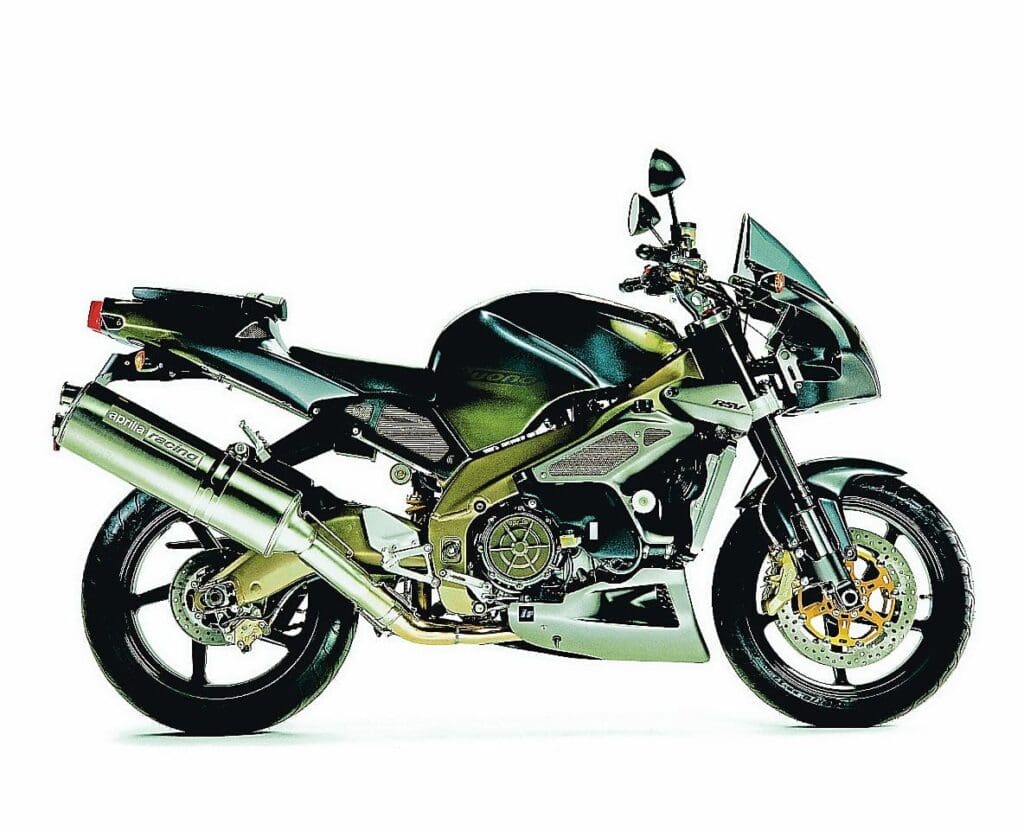
And now the Tuono V-twin family. Originating from a concept machine in 2001 being basically a stripped-down Mille, with similar top-fairing, the bike came with carbon-fibre panels and Ohlins suspension, and only around 220 Tuono R Limited machines were made.
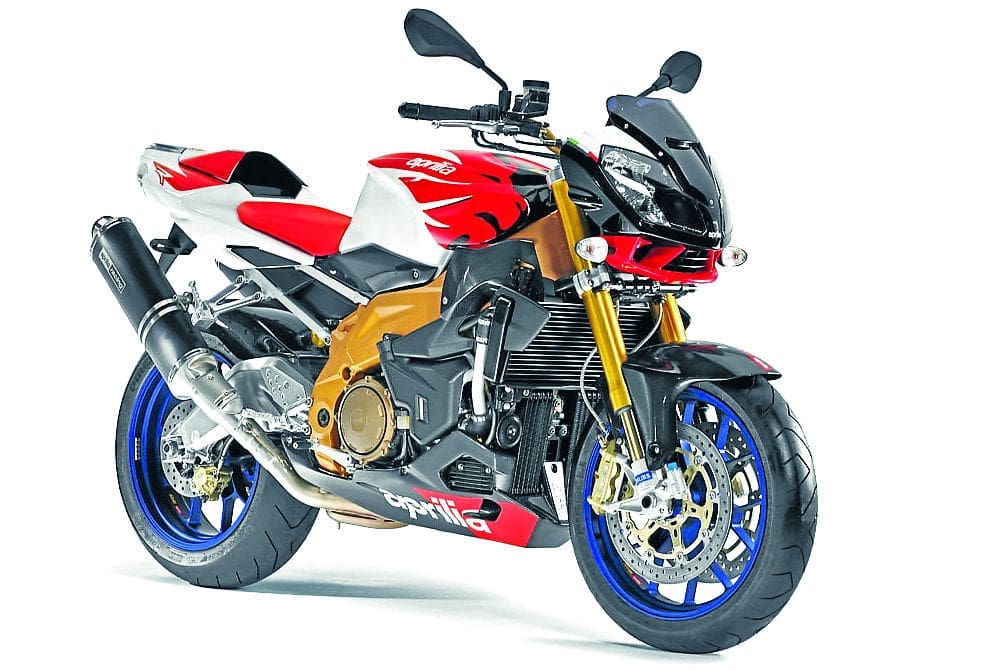
The first mass-produced base model Tuono (or Tuono Fighter in some markets and later RSV Tuono in others) used Sachs/Boge suspension units, but the chassis/motor was largely the same. Later 2005/06 models were called the Tuono 1000 R, basically the same, but with Brembo Goldline brakes and Sachs suspension front and rear. The Gen.1 Tuono Racing had Ohlins suspension front and rear, OZ wheels, Ohlins steering damper and carbon-fibre bodywork, as well as adjustable gear-lever (for race-shift), and if you fitted the belly-pan/catch-tank, you lost the side-stand.
The sports Mille was replaced by the ‘Gen.2’ in September 2003 and the Tuono followed suit, if somewhat confusingly. From late 2005 in came the ‘Gen.2’ Tuono 1000 R (or Tuono Fighter) which had the same basic motor, but tweaked to 130-135bhp claimed and it had Sachs shock and Showa forks. The Gen.2 models had the Tuono 1000 R Factory replacing the ‘Racing’ model, effectively the naked version of the Gen.2 RSV 1000R Factory. The Factory had Ohlins front and rear, lightweight wheels, gold frame and lighter carbon bits and bobs, resulting in a bike four kilos lighter.