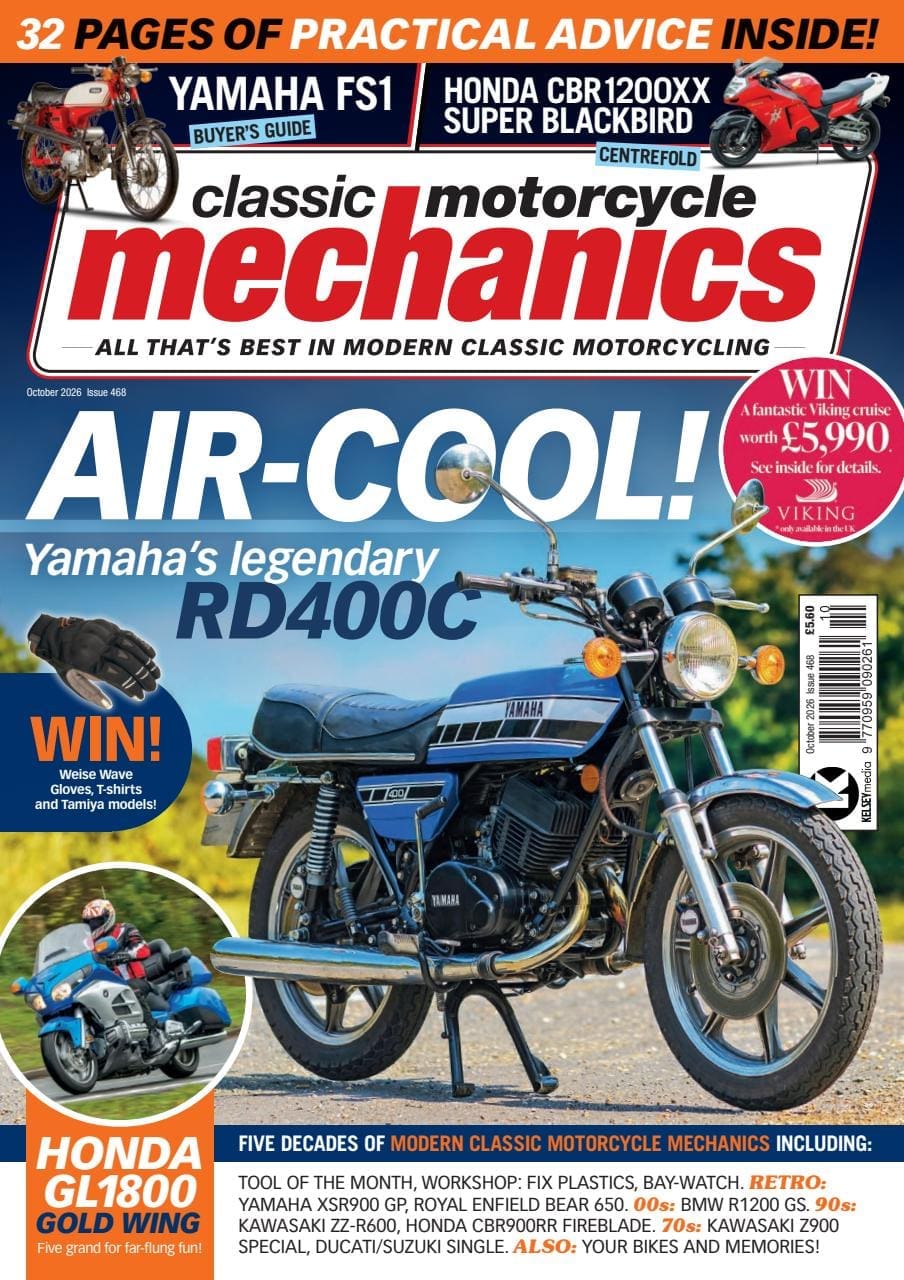

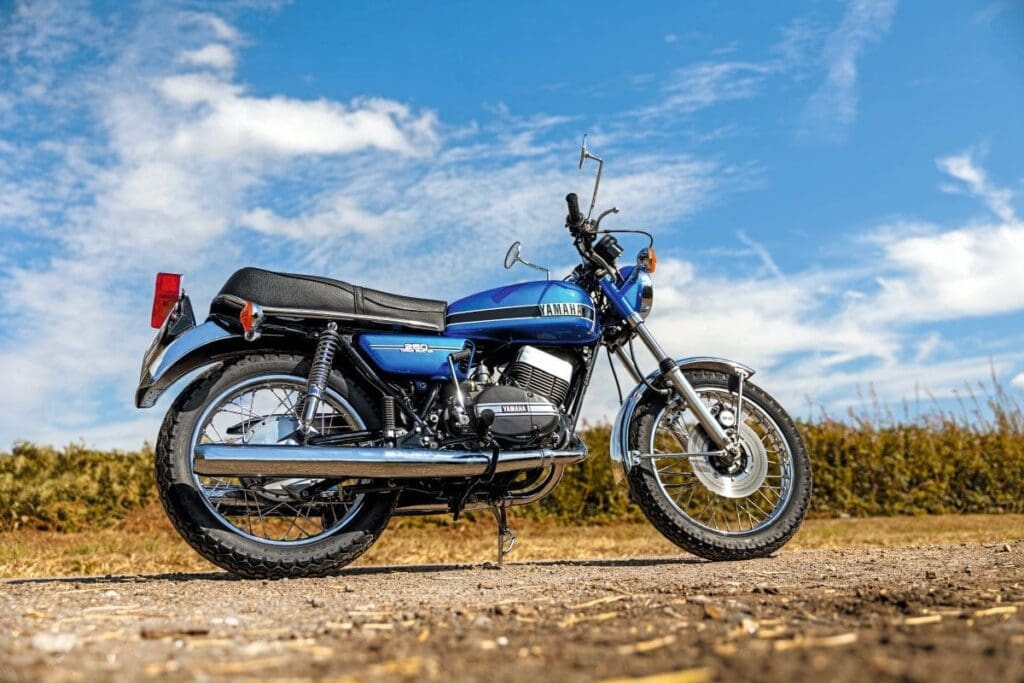
What emotions do Yamaha’s air-cooled RDs conjure up for you then? Sights and sounds of the 1970s? Very possibly, says Yam twin-stroker sage Steve Cooper after sampling this Yamaha RD250A.
Words: Steve Cooper Pics: Gary Chapman
This is the second 70s Yamaha RD250 I’ve sampled for CMM over the years and it’s just like meeting up with a long-lost friend.
Some of the familiarity to this is unquestionably the fact that I own and ride an RD350 of similar age and other than the larger capacity cylinders the two bikes are effectively the same machines. Both are hugely capable motorcycles and, very possibly, the epitome of the air-cooled, two-stroke genre. Oh, and the auditory signature of one of the early RD250s might very well be the soundtrack to many a CMM reader’s formative years.
Enjoy more Classic Motorcycle Mechanics Magazine reading every month.
Click here to subscribe & save.
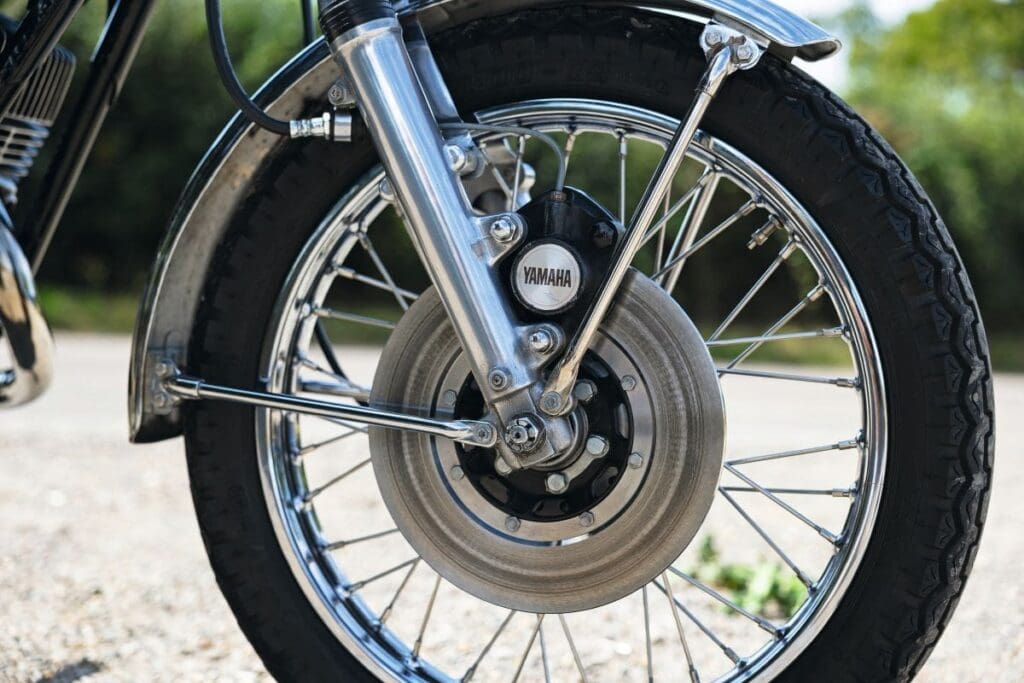
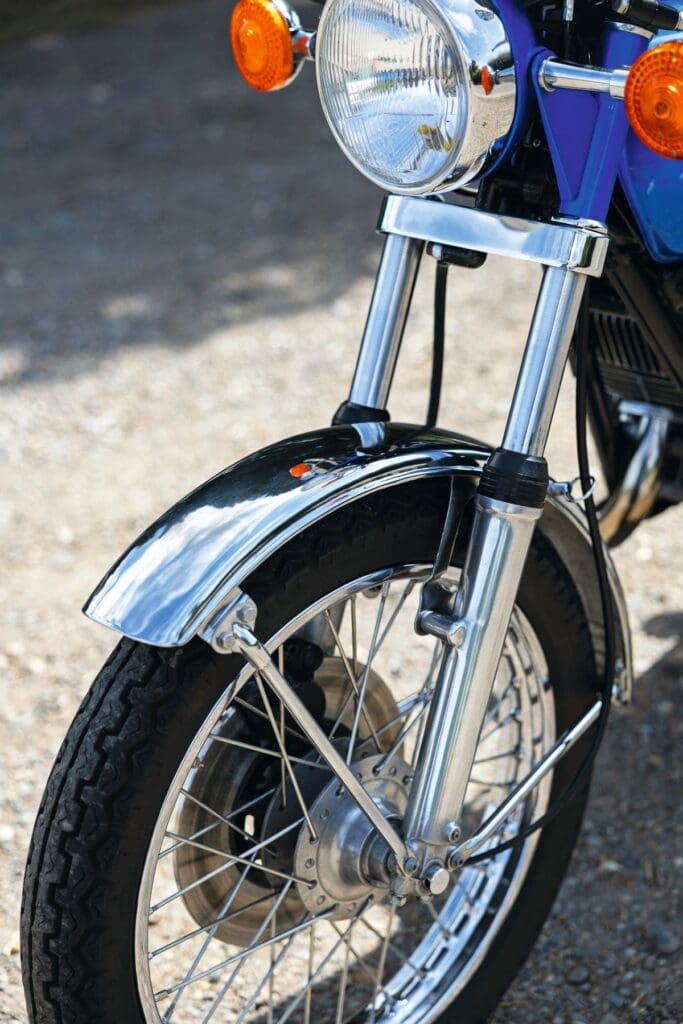
The new quarter-litre twin was unveiled at the end of 1972 for the following model year and hailed as a groundbreaking machine. The simple addition of a front disc brake brought the RD bang up-to-date (see boxout) and the installation of reed-valves transformed how the motor breathed.
Simplistically, the metal petals – located between the carburettors and the back of the cylinders – acted as a one-way valve. This, in turn, made significant improvements in torque and performance levels at low rpm and under partial load.
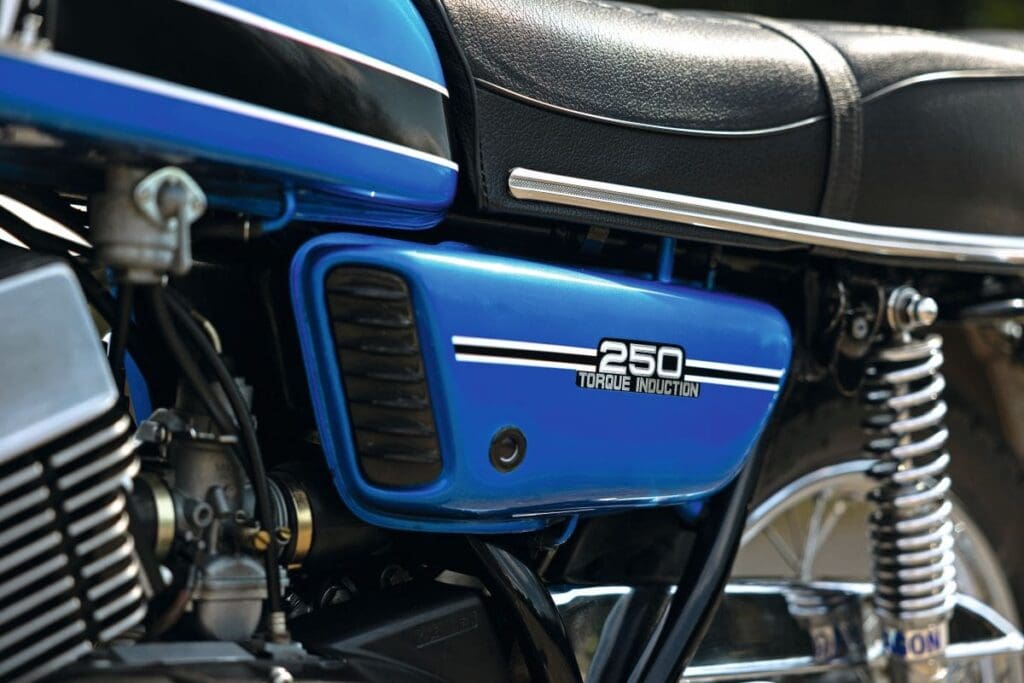
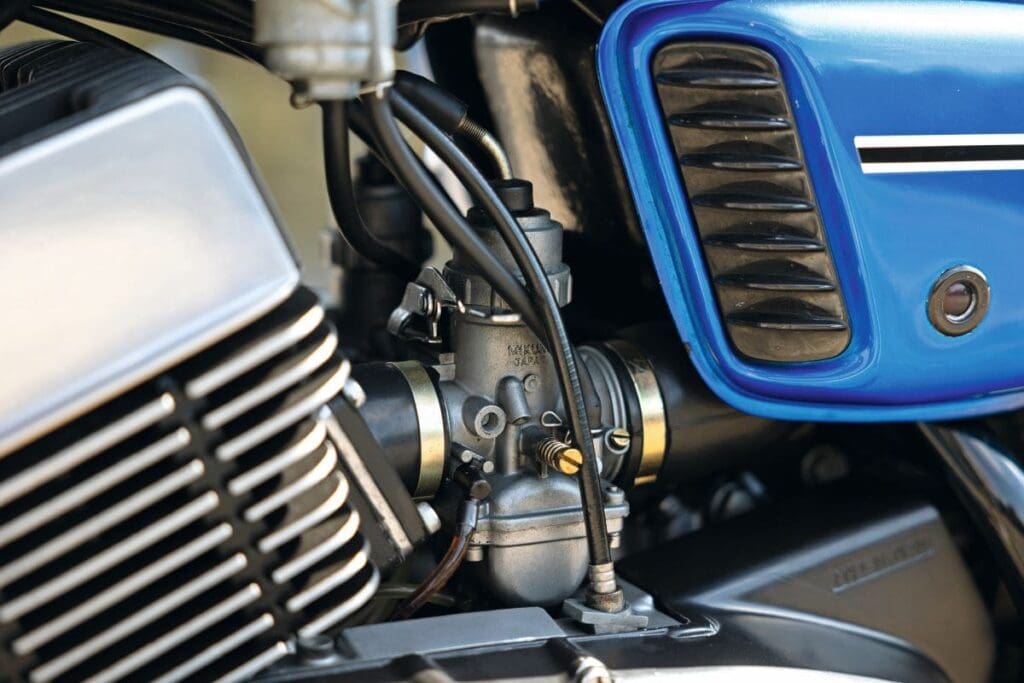
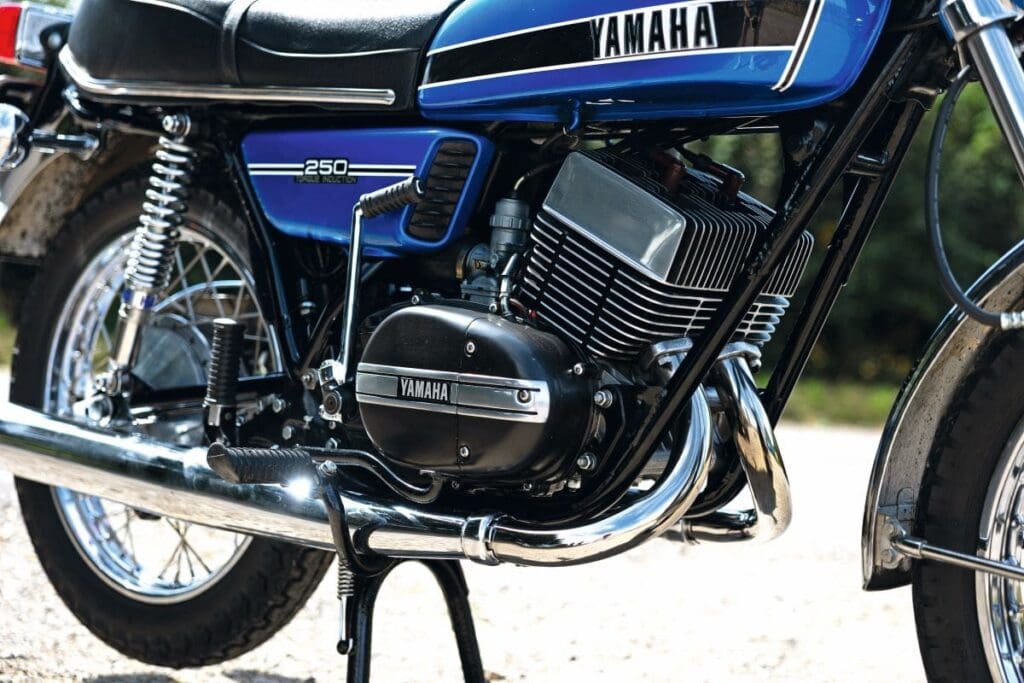
Yes, in theory the reed-valve set up was effectively a restriction in terms of pure air-flow. And yet, crucially, the device stopped any blowback from the crankcases shuttling back and forth along the inlet tracts. This, in turn, liberated more power via better use of the fuel/air mixture. Some might argue that a disc-valve gave enhanced overall performance, but such devices added width to engines and increased manufacturing costs. The uncomplicated reed-valve was an elegant, simple and cost-effective route to enhancing the old YDS7 power unit with the absolute minimum of structural changes.
All of this ultimately delivered a powerplant that punched above its capacity when compared to its most obvious rival – Suzuki’s ageing GT250. Whilst the Yamaha would go on to be a relative model of flexibility, the Suzuki was destined to be ever more stressed and over-stretched. It was no coincidence that the Suzuki GT’s replacement, the X7, was fitted with reed-valves.
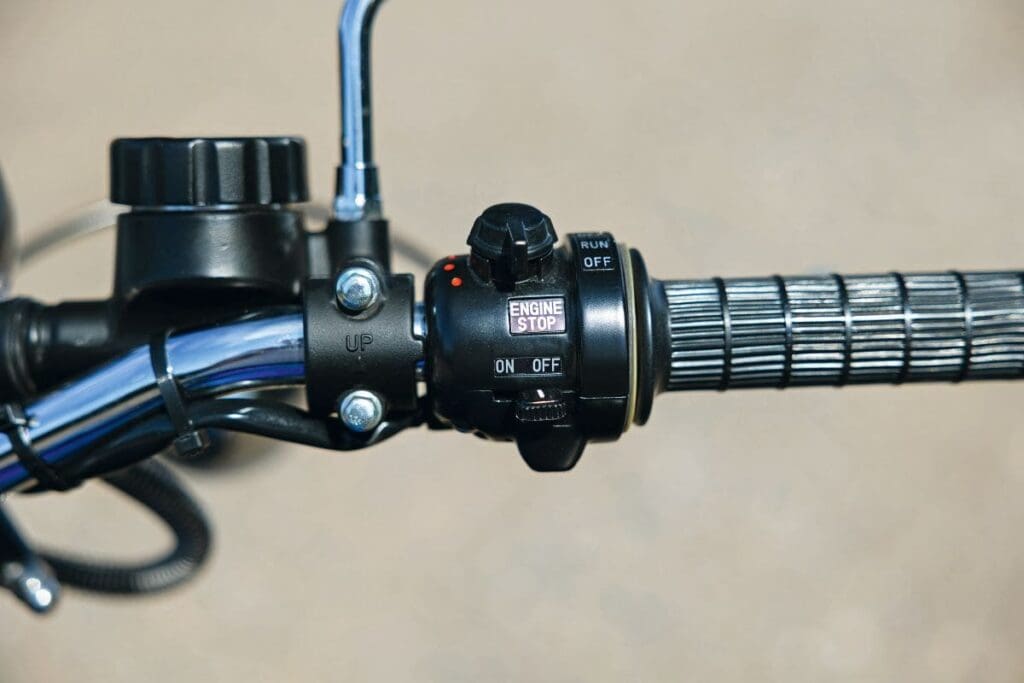
Internals duly dealt with, it’s time to move on to the running gear and fittings. What’s there is essentially a revised and upgraded YDS7 with some key changes. Panel work is generally more rounded and organic; badging upgraded; and lines more in keeping with the period. The RD’s switchgear is in satin black which looks funky with those aluminium foil decals but in reality is a cost-cutting exercise.
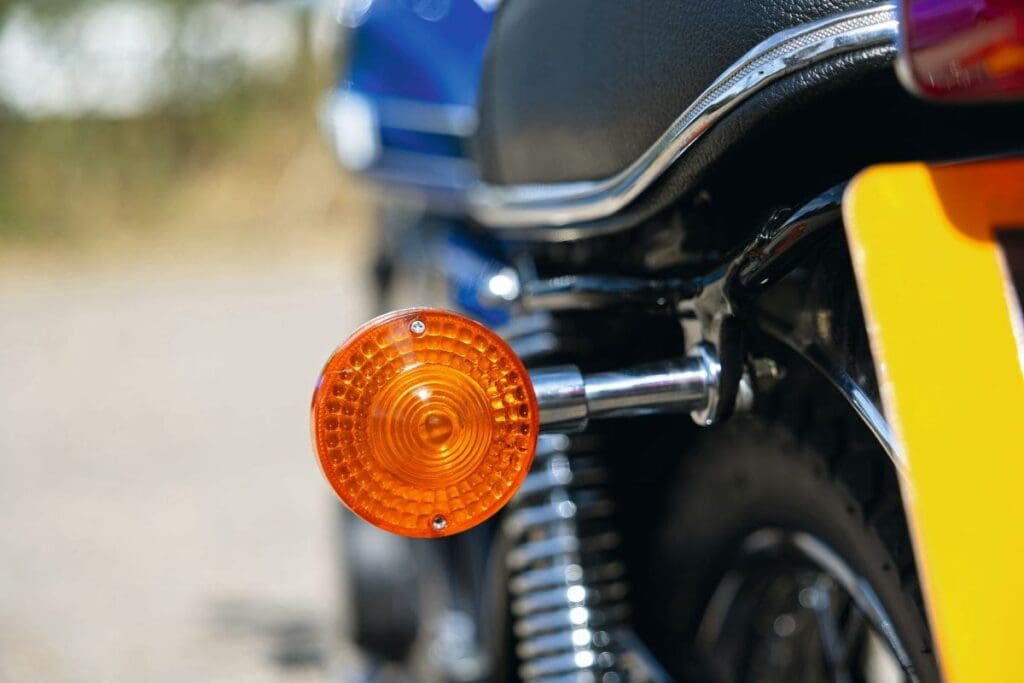
They were cheaper to produce than the linished/ polished units used on the older models. What’s not are the significantly more obvious indicators which were to become standard fitment on almost every Yamaha from that point on; only the smaller twins would continue to run the previous globular design.
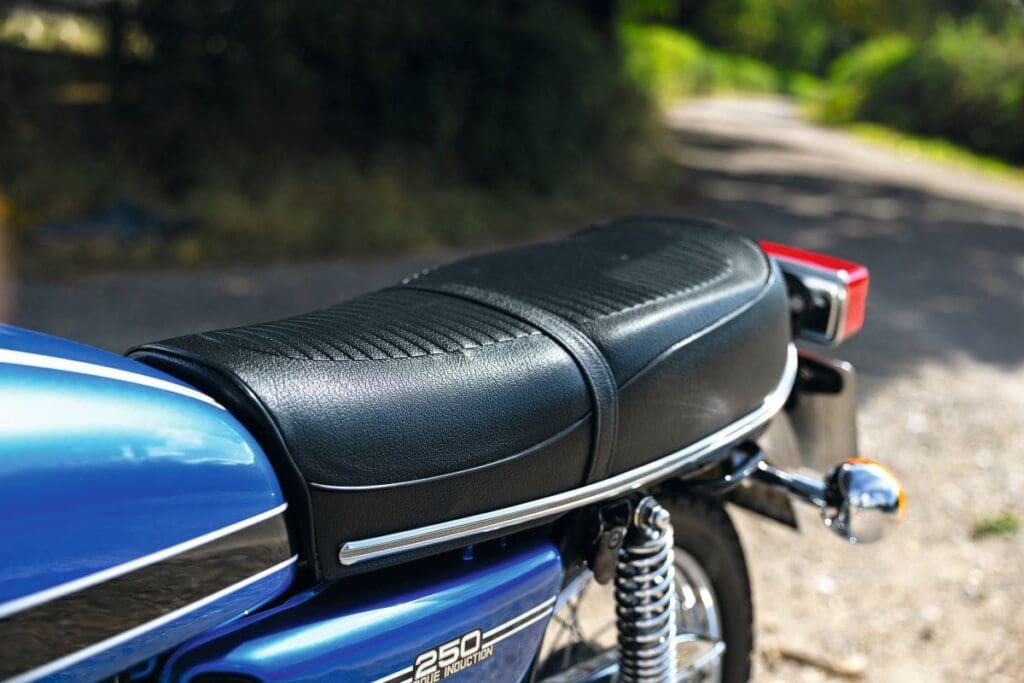
Enhanced security was another notable change from YDS to RD. The tank’s filler cap which morphed from a simple twist off to a hinged and lockable device along with a lock fitted to the seat catch. Elsewhere the chassis was very much taken from the YDS7 and subtly modified to suit, but why, given that the RD was being touted as an ‘all-new’ motorcycle? Quite simply because there was precious little wrong with what was there already. Yamaha made much of the RD sobriquet, suggesting it stood for Race Developed or Race Designed, but the truth was that hard work had been done in the late 1960s.
Both the 1970 YDS7 250 and YR5 350 had already benefitted from GP chassis design input and these were simply carried over to the RDs. The reed-valves had previously been seen on Yamaha’s dirt bikes and would subsequently be used on the likes of Jarno Saarinen’s Grand Prix machines. Perhaps the RD name was justified, but it was also a large slice of marketing spin as well quite simply to differentiate between two models that genuinely shared a lot.
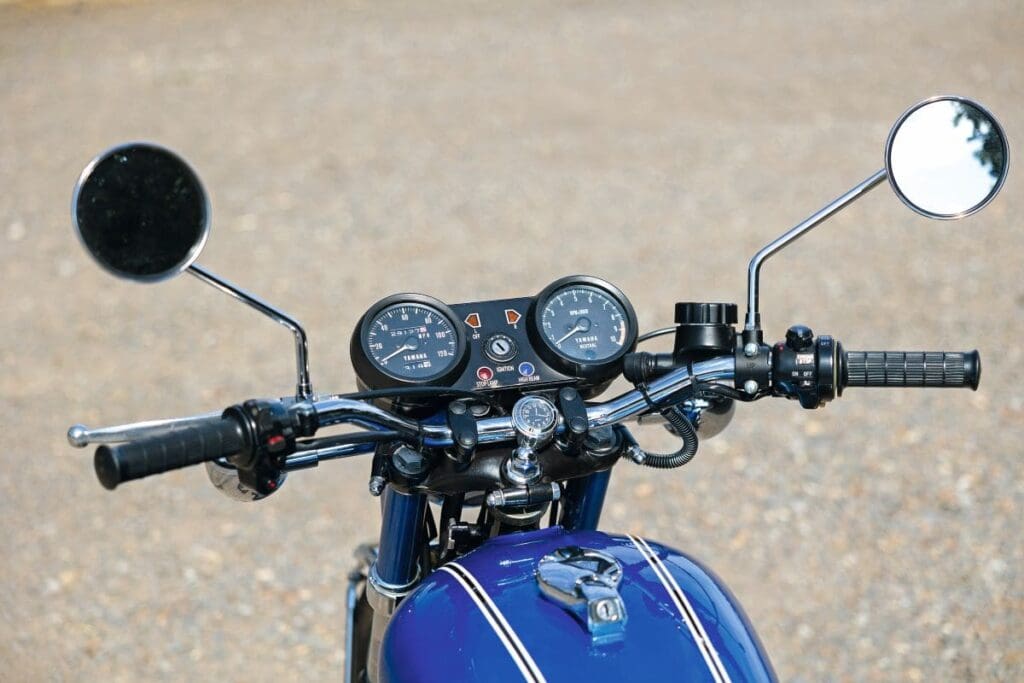
If the outgoing YDS7 was elegant, then the RD250 was handsome and refined – more of the same but different, would be good description. The outer engine cases are more rounded and everything else is subtly less angular. From the rider’s perspective the biggest single difference has to be that instrument panel-cum-dashboard. Yes, there’s still a pair of individual gauges, but they’re housed in one homogenous unit together with an array of idiot lights designed to be idiot-proof… or at least idiot-resistant.
Other than the neutral light that’s in the tacho, they’re all in between the gauge faces. Two separate orange arrows clearly denote left or right; there’s a blue roundel for high beam; and a clever red one that confirms when the brake light is enabled and stays on permanently if the filament fails – clever stuff for the time.
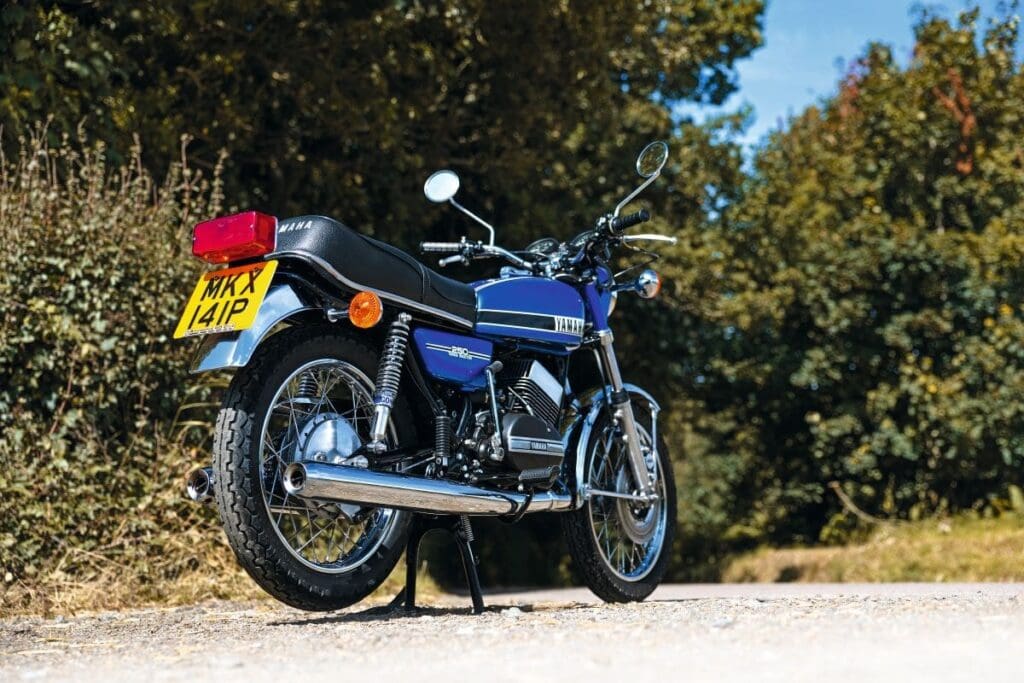
The previously mentioned switchgear is intuitive to operate and requires but a few moments to grasp. And, best of all, unlike the Hondas of the period, you don’t need the extended digits of a Madagascan Aye-Aye lemur to activate the bloody indicator switch! Our bike in camera is a survivor, not a show pony, and eagle-eyed readers will already have spotted it sports a D series rear light, not the expected teardrop one. A little more anoraking divvies up the headlight rim which is, apparently, either from a French or German model. Are those impediments to riding the bike? Absolutely damn well not!
The ride…
Starting the RD250 is simplicity itself with the fuel on, choke depressed if the motor’s cold, and the ignition on. One kick, possibly two, and it’s up and running, confirming that you really don’t have to have CDIs to get these grand old dames going. The dramatic inlet roar of the older series 250 Yamaha twins had been banished on the YDS7 and here on the second-generation RD the huff sideof things is relatively muted. On the puff side there’s a little bit of combustion noise from the chrome down-pipes before those smooth and sleek exhausts take over and do their magic. Up to 4750rpm the bike is almost docile as the subtle benefits conferred by those reed-valves do their thing. Just 250 revs later the motor picks up, gets into its stride, then goes bat-shit crazy at 6000.
It’s little wonder the RD250 was so hugely popular amongst the learners of the 70s. The motor loves to be worked and thrives on revs but, unlike its peers, it doesn’t get easily flummoxed if the tacho needle drops out of the fun zone and this is where those reed-valves come into play.
Say you’ve been giving it the beans in fourth gear and you suddenly have to throttle off. On a GT250 you’d be tapping the gear lever down ready to get the motor back on the boil. You can do the same here or you can just open the throttle without dancing on the left pedal and know the RD’s unique inlet system will just get on with the business. If you want frantic it’s still available, but having the option to make the most of the much-vaunted ‘Torque Induction’ facility makes for a more enjoyable, less fraught, ride.
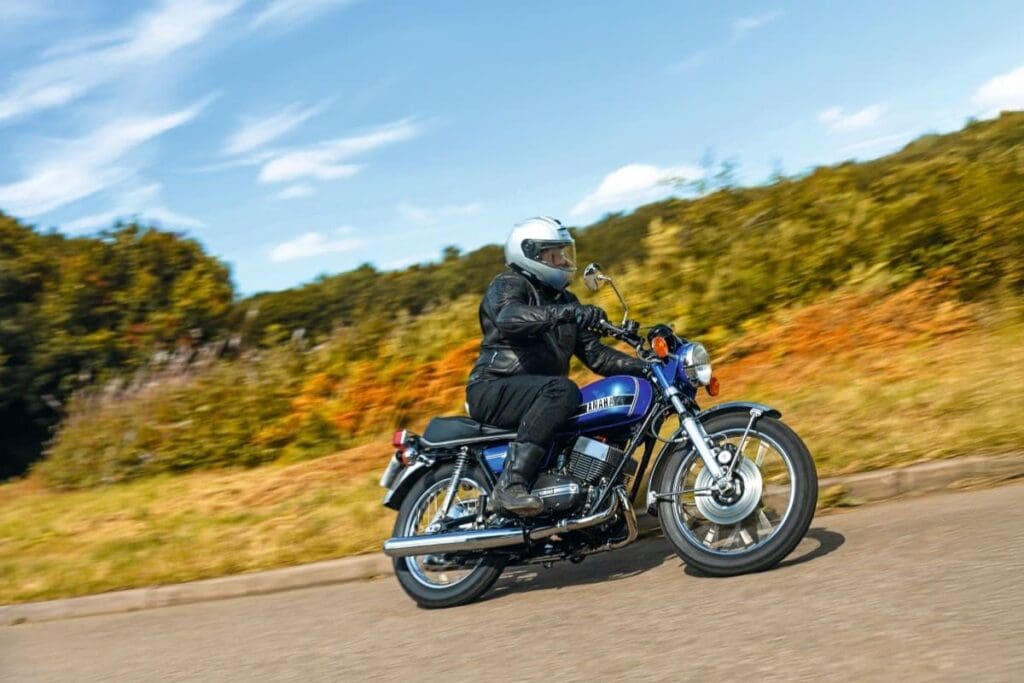
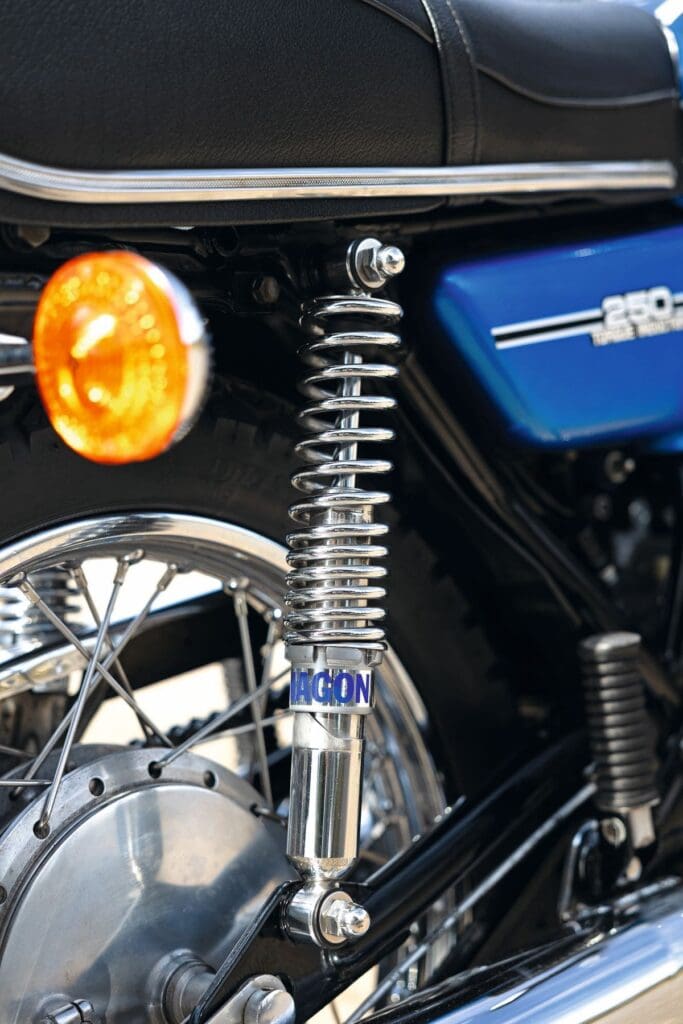
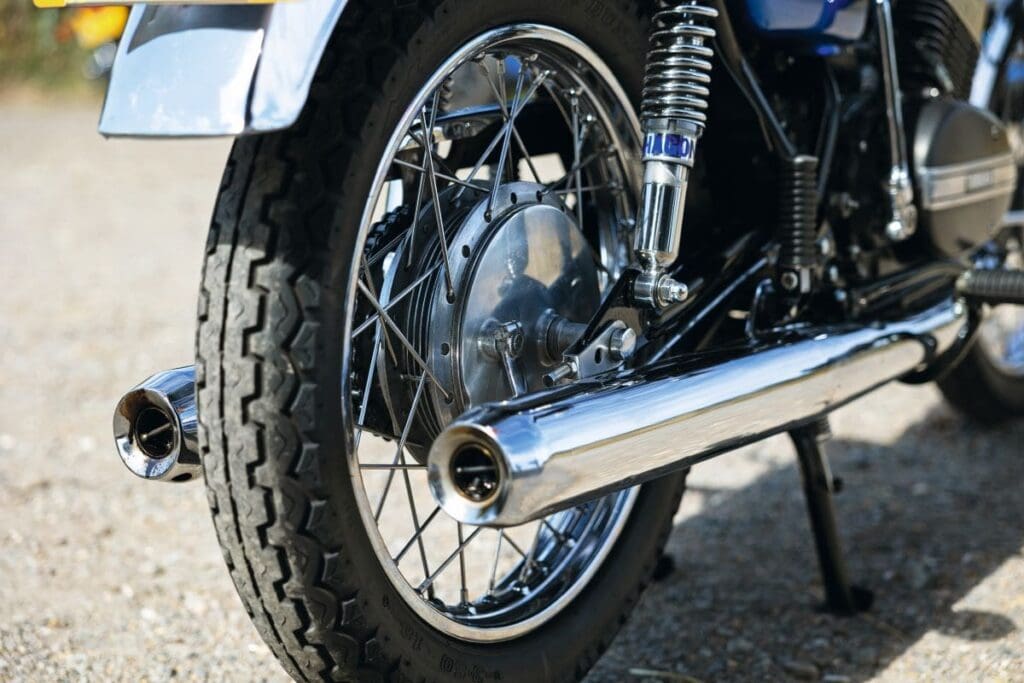
By the standards of the 1970s the RD250’s handling was up there with the best and a fair way on from the previous, later 1960s, standards of over-sprung and under-damped. Kids of the period got by on the OEM rear shocks and standard fitment Yokohama rubber, and then upgraded as circumstances allowed. If you were seriously flushed, the rubber would have been swapped out for a pair of Dunlop’s TT100s or similar, while those on tighter budgets went down the Avon route. When the rear shocks cried off it was normally a set of black Girlings if you wanted good handling or something secondhand that fitted if times were hard. The Dunlop TT100 Classic tyres and Hagon shocks on this A model are more than up the task in hand, demonstrating just how far things have come along for older Japanese machines and at sensible money.
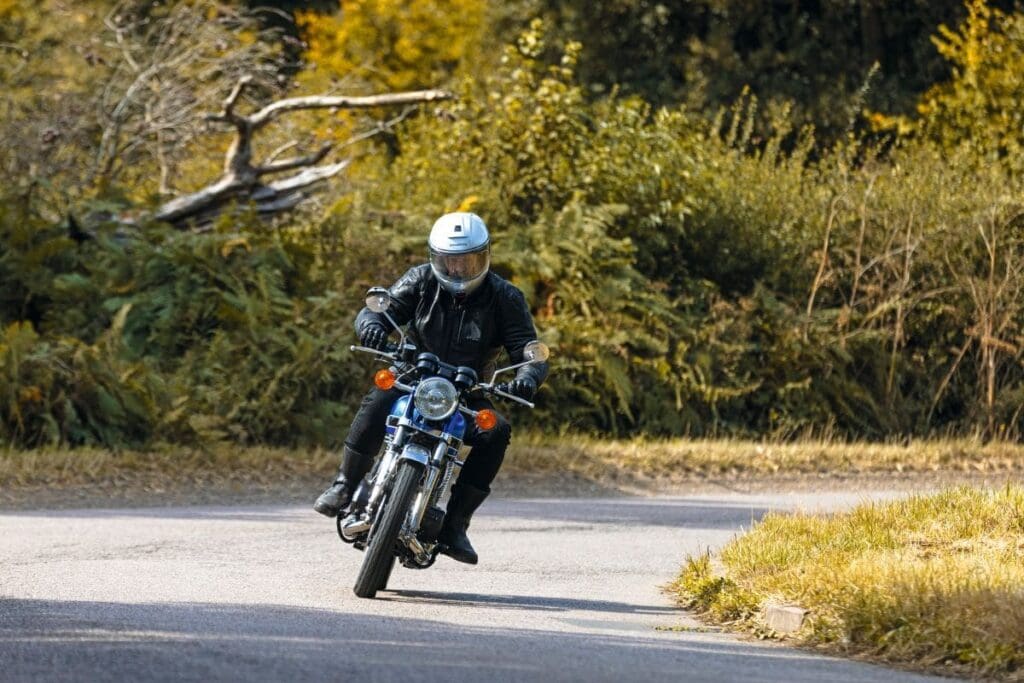
The handling is confidence-inspiring even if it’s not in the same league of later LCs or TZRs, and yet it’s more than up to the job. Even if the steel used for the frame wasn’t the same grade as that used on the factory GP bikes, the tube work’s various geometries are close and that shines through. As does that front brake with its two-part, cast-iron, twin-piston caliper. Licenced from Lockheed or Girling, it was effectively the same design as used at GPs and it shows – it’s strong, predictable and fade-free in normal day-to-day use. My only suggestion on the day to owner Steve was to hunt down some SBS road pads and swap out the current green pads. Having been recommended them by SBS’s technical department, I can personally vouch for their enhanced efficacy. However, I’m nit-picking here because the bike is such a pleasure to sample and ride – it’s comfortable, accessible and just so easy to ride.
Yes, you could tune it, fit rear-sets and ace bars, possibly a fairing and some racy little seat, but why would you? When you’ve got a survivor like this that starts, stops and runs this well, what’s the point? Enjoyed for what it is and just kept in this condition, there’s thousands of miles and lots of years left in one of the period’s best 250s… ever!
What came before the RD?
Yamaha’s air-cooled RD250 was little more than a tweaked YDS7.
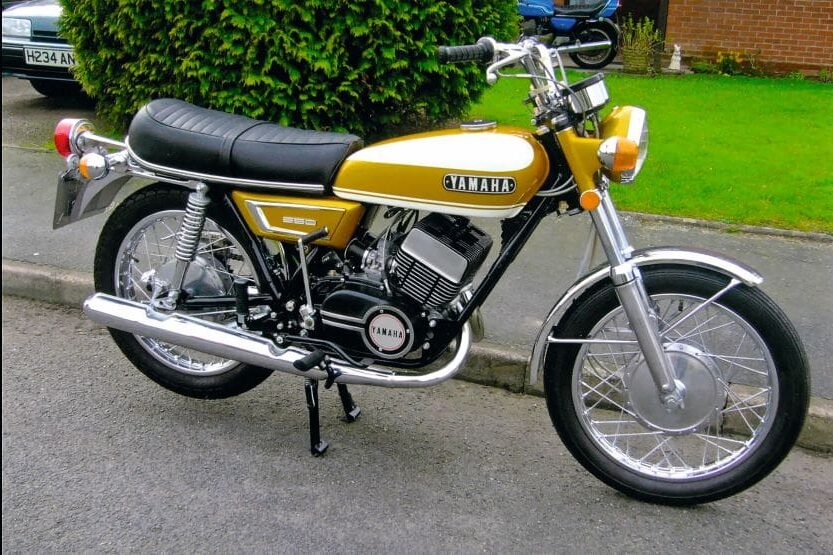
The YDS7 was a sea-change from previous 250 models in that the bike was a ground-up design that owed nothing to the past. The new motor had a horizontally split crankcaseand a chassis that owed much to the GP and privateer race bikes.
Styling-wise, the bike was a breath of fresh air with light, clean lines and an absence of heft about its profile. Rolled out in Japan as the DX250 and the YDS7 globally for the 1970 model year, it was an instant success.
Other than some minor cosmetic changes the model ran for three years pretty much unchanged, but not in Japan! 1972 saw the bike renamed and remodelled as the Yamaha DX250 PRO. Something of a halfway house between the YDS7 and RD250, the PRO iteration ran the RD’s front disc brake and guard with the older model’s panel work cosmetically updated.
Arguably it was a strange move given that the RD250 was already in the wings. Some might venture that Yamaha needed to ‘work off’ remaining YDS7 parts but had already run out of the model’s drum front brakes. A nice theory perhaps, but in 1974 Yamaha sold RD250As into the American market fitted with a twin leading shoe front brake as previously fitted to the YDS7!
As our colonial cousins might say: go figure!
How many gears has it got mister?
Both the 1973 RD250 and 1974 RD250A arrived with five-speed gearboxes, even though the cases contained six ratios, and the subject still generates lively debate.
That the previous YDS7 had five and only five ratios is an immutable fact, yet Yamaha’s own Communication Plaza website clearly states the 1973 RD250 has six: why? There’re two suggested reasons and it’s still not clear which, if either, is truly correct.
One belief suggests the initial examples were limited to five speeds to comply with USA-based AMA production bike racing rules. The second perception is to do with the way motorcycles were assessed against the-then EEC noise emission standards. If the RD was measured at X percentage maximum revs with a five-speed box in third gear it passed, BUT if fitted with six cogs and measured in fourth it failed…. or some such criteria. Whatever the true reason, it didn’t take dealers and owners long to liberate the ‘missing’ top gear and fit the revised front and rear sprockets.
Ultimately, having half-a-dozen ratios was probably more about bragging rights than anything else, but now? Just enjoy what you’ve got for what it is and thank those old boys at Yamaha for an amazing piece of kit.
Owner’s story – Steve Hamilton
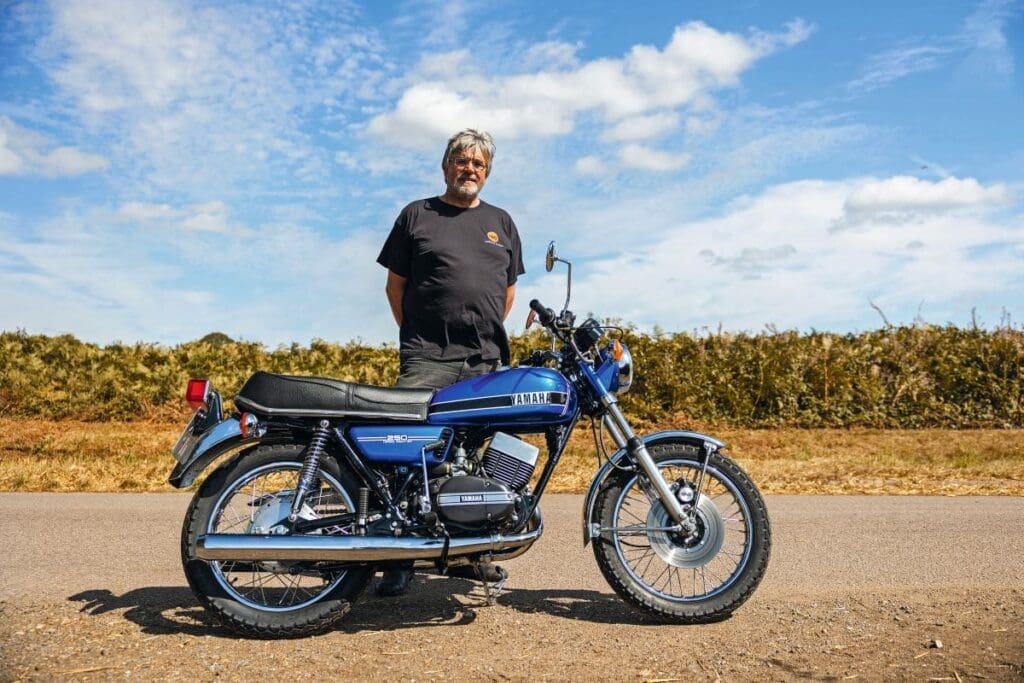
This bike is my baby! We’ve been together since 1982,which is longer than I’ve been with my wife.
I can’t remember what I paid, but it wasn’t much and it’s some of the best money I’ve ever spent on a bike. It was far from pristine, and for several years I used it as my second bike. I would use it when the weather was iffy, ensuring that my main bike stayed clean and dry. I did very little to the bike, apart from routine stuff like plugs, oil, tyres, etc., and it just ran and ran. I never had the engine apart; I didn’t need to.
However, life moves on, and I acquired a wife and children, and when we moved to our family home in 1988 the bike was put into storage, and to my shame it stayed there until 2017. It was always my intention to get it out and running again, but it just never happened. Well, not until the kids were grown up and had fled the nest and I finally had some time and garage space on my hands. It was a rolling restoration, which took place in mainly two stages over a three-year period.
There are parts of the bike that won’t please the rivet counters. It has the rear light from a later RD model, and the bars are lower than they should be. However, that’s the way it was when I brought it, so that’s the way it stays. The bike was first registered in Jan 1976, very late for an A model. It’s actually a French market machine and was imported new to the UK.
The bike is used regularly, and still runs like clockwork, with very little tinkering required. I use it a lot, even more now I’ve just reached retirement and have free time on my hands. I’m sure we will have many more happy years together. As I get old and infirm, my kids know, this is the bike they must never sell!
Specification
ENGINE TYPE: Air-cooled, reed-valve, two-stroke, twin
BORE AND STROKE: 54.0mm x 54.0mm
CLAIMED HORSEPOWER: 30bhp @ 7500rpm
MAXIMUM TORQUE: 21.0ft/lb @ 7000rpm
TRANSMISSION TYPE: 5-speed (as tested)
COMPRESSION RATIO : 6.7:1
CARBURATION : 2 x Mikuni VM28SC
TYRES : 3.00 – 18 (F) 3.50 -18 (R)
FUEL CAPACITY: 3.6 gallons (16.5 litres)
BRAKES: Single disc (F), drum (R)
DRY WEIGHT: 152kg (335lb)